Showcase
A selection of special screenplays from 2026
Calling all film producers and directors seeking captivating scripts.
We are excited to facilitate direct connections between you and the talented screenwriters behind outstanding projects. What makes this opportunity even better? Our support is completely free of charge. Discover exceptional scripts, connect with passionate emerging voices, and explore new creative collaborations. Reach out today and let us help bring your cinematic vision to life.
-
10 Episode TV Series
Synopsis
Imagine? writing and Publishing over a hundred books screenplays at Amazon, over a 20-year period and condense all into a 10-episode TV Series with lots of shape shifting scenes, and special effect scenes, it's what Hollywood loves, now Hollywood is everywhere.
Writer Biography
Logline? I play the Imaginary multi-billionaire who owns a 10-acre, ocean front mansion with Bodyguards, maids and butlers, doing lecture seminars all over the world, riding around in a restored 1949 Rolls Royce Limousine, already setup as a 10- episode TV Series with lots of special effect scenes, and shape shifting scenes, it's what Hollywood loves, now Hollywood is everywhere. I am the rebellious teacher a pile of books and a Holy bible in one hand and a bottle of whiskey in the other hand to shut my demons up for a while, yes, fighting demons, the religious system and the educational system, trying to teach to a world that does not want to know the truth, I am an immortal spirit soul and so are you, I have lived many lifetimes and so have you. go to Amazon, in search window, type in my name, Melvin Abercrombie, 30 free e-books my gift to everyone, Thank you
Selections and Awards
Marina Del Rey International film festival
Cinema World fest
Hollywood
1st place -
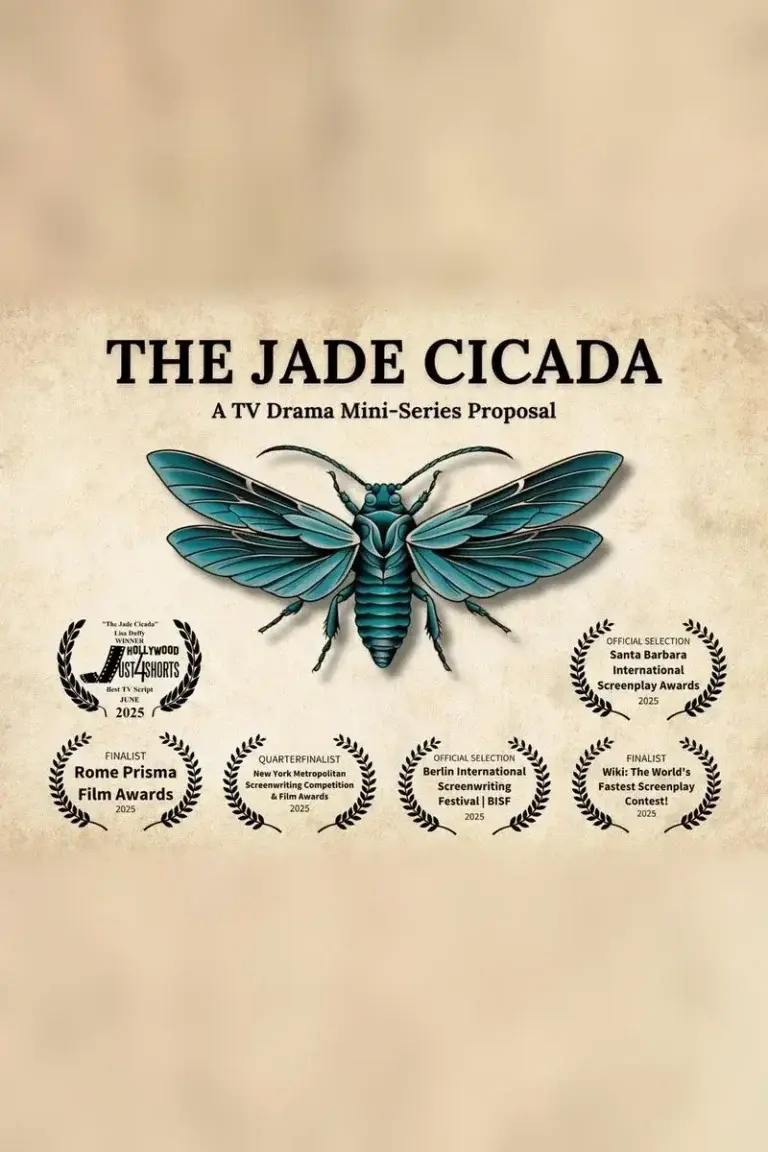
The Jade Cicada
Synopsis
What if you could feel your brother’s physical pain from half a world away?
As Saigon falls, sixteen-year-old twins Kimoanh and Cuong Nguyễn are violently torn apart. Kimoanh escapes aboard a crowded refugee ferry, grief-stricken and unsure if her brother is dead or alive. But as bruises and injuries mysteriously appear on her body, she begins to suspect the unthinkable: her twin is alive, and suffering.
She feels her twin’s pain; he sees his chance at fame.
As Cuong endures unspeakable torture inside a Viet Cong re-education camp, Kimoanh is stuck in Camp Pendleton's refugee community, struggling to have her connection to Cuong taken seriously. She finds an unlikely ally in Cameron Bailey, a brilliant but embittered American filmmaker who sees Kimoanh as his ticket to fame.
Can a mysterious jade cicada deliver a miracle?
A jade cicada is the enigmatic symbol of an underground resistance effort that guides our characters through the dangerous landscapes and forgotten war tunnels of Vietnam in this visually rich, emotionally powerful limited series in the tradition of HBO’s "Chernobyl" and Netflix’s "The Queen’s Gambit."
Writer Biography
Lisa Duffy is a four-time published non-fiction author based in South Carolina. Drawing from a deep personal connection to the real-life sister and brother who inspired the story, she brings emotional authenticity and narrative urgency to The Jade Cicada, her first dramatic series. With a voice rooted in truth and compassion, Duffy crafts character-driven stories that resonate far beyond the final frame.
-
Synopsis
REZ is a satirical comedy featuring four very different modern-day Native Americans and their Euro-American sidekick living in an asphalt jungle. Upon being taken captive in an inner-city dive bar we come to ponder who the real prisoners are in contemporary United States. Not just in body, but spirit.
Writer Biography
Native American Person of Shawnee Blood.
Writer, Historian, Person of The People.
Writer Statement
The time's come for entertainment in all forms to feature Native Americans as mainstream characters and not just the stereotypes and animated images of our youth featuring teepees and painted faces. Indigenous Persons have lived on this patch of land for over 15,000 years. And our story, our true story, and contemporary sagas are not just important, but fascinating. And we're pretty darn funny, too. Fifteen Millenia in the same place is bound to make for some funny stuff.
Selections and Awards
Too many to mention
-

Anguish
Synopsis
Frank, broken by depression and substance abuse, struggles to handle a devastating loss in his life. His friends and family try their best to help Frank face his demons as well as the ugly truth.
Writer Biography
Daniel McEwan was born on December 10th, 2002. He is a writer/director and has made his first short horror, slasher film, The Welder. It premiered at his alma mater, UC Clermont, which had a modest crowd of seventy people. He is now shopping it around at various film festivals and got selected into Film Fest Fusion.
Daniel is also writing a feature film called Anguish about a depressed alcoholic, Frank, who is dealing with a major loss in his life. He is currently submitting to screen writing contests.
Writer Statement
Anguish is very personal to me and I used a lot of my own experience for the screenplay. My hope is that it can help people who still struggle with substance abuse as well as mental health.
Selections and Awards
Better Earth International Film Festival
Kolkata, West Bengal, India
June 23, 2026
Outstanding Achievement AwardInternational Indie Screenplay Festival
Milan, Italy
August 3, 2026
NomineeFlorence Independent Cinema International Film Festival
Florence, Italy
October 31, 2026
Honorable Mention -
When on High
Synopsis
When Anthony Chelsea, an unsuspecting descendant of the goddess Tiamat, discovers that the god Marduk plans to rewrite creation and enslave humanity, he must rally his old friends from the neighborhood to protect the jewels of creation and restore balance to a flawed Genesis.
-

Normal Thoughts From A Strange Mind - Session A
-
The Last Valkyrie
Synopsis
A Viking shield-maiden searches through the centuries for the god responsible for her immortality.
-

DENIERS
Synopsis
How does it feel to hope for a murder? Days before 9/11, a young Cold War researcher has to wring information about a low-key conference in Leningrad in 1967 from one of the participants. The retiring doctor's evasions stoke the heroine's hopes that an overlooked spy mystery death could get her the research prize she badly wants.
DENIERS is a mystery drama set in New York City, Leningrad and Smyrna.
Selections and Awards
Chicago Screenplay Awards
March 28, 2024
FinalistLondon Greek Film Festival
July 29, 2025
Finalist -
Uncircumcised Ha Mashiach
Synopsis
The Movie series is called Avalon, a weekly or monthly series utilizing one of a hundred of my books/screenplays, this is one part of the series, teaching about the Uncircumcised Ha mashiach, we know the Holy Bible teaches that the spirit of God went into the virgin Mary, Did God marry Her? No, she was already promised to joseph, Did God break His own laws of Deuteronimy22, if an angel told Joseph to not lay with her then were they legally married? No, according to Jewish law, what do you call a child born out of wedlock? Could this be why the Jewish did not accept Jesus as their Ha Mashiach? What really did happen? Now the Truth, then an Angel told the Virgin Mary and Joseph to flee to Egypt because Herod wanted the baby dead, Did the 3 wise men go to Egypt also? They had to flee too, Did God not allow His son to be circumcised and changed with the permanent mark on his foreskin on the head of the penis putting a permanent mark of the beast, what gives us the right to change what God created? I understand this was a clean law because they were in the desert, very little water, now we have plenty of water, 2,000 years later we are still butchering innocent baby boys and changing what God created, Did the Jewish Rabbi find out and were willing to let a known murderer go free to silence their radical Rabbi? The real son of God, the Messiah, the Ha Mashiach, my books/screenplays continue where the Da Vinci Code left off, the rest of the Story, Avalon is the Church Jesus would go to if he was alive today, teaching God and the Goddess, Re-incarnation, the 7th day Saturday sabbath, the kosher clean food laws and your Fingerprint, make a lot of TV series, lots of special effects and shape shifting scenes already setup as a movie script, over a hundred books/screenplays at Amazon, 30 free e-books, my free gift to you, under my fingerprint during this lifetime as Melvin Abercrombie.
Writer Biography
I am an immortal spirit soul and so are you, I have lived many lifetimes and so have you, we are in our Heaven and Hell right now, They call me a Rebellious Teacher, a pile of books in one hand and a bottle of whiskey in the other hand, fighting Demons and the educational system, trying to teach to a world that does not want to know the truth, all my books/screenplays are setup as a 10 episode TV Series, movie script with lots of special effect scenes some sex scenes and shape-shifting scenes. Some of my older books I was called the Rebel Preacher series all together one unit What right do we have to change what our God created by butchering innocent baby boys?
Writer Statement
I wrote over a hundred books/screenplays at Amazon,30 free e-book downloads, also at Barnes and Noble, Goodreads, Books a Million and eBay under my fingerprint during this lifetime as Melvin Abercrombie. and 3 books at Trafford Publishing, I am retired, willing to travel, willing to consider signing a book/screenplay to movie contract for all of my books, will not separate, make me an offer, I retain copyrights and royalty rights for all my books/screenplays, I have a lot more ideas to add if needed, I will not write anymore books or screenplays you will own the movie rights for all of them, my info is melvinabercrombie75@gmail.com thank you
-
Priceless
Synopsis
A team of art thieves race to save one of their own from a ruthless drug lord who has demanded a priceless black market painting, En Canot, as a ransom for their return.
Writer Biography
Barbara Lettieri is a German-born writer, producer, and actress of Italian heritage with dual Italian (EU) and U.S. citizenship. She grew up in the Black Forest in Villingen-Schwenningen before traveling extensively and eventually settling in Los Angeles.
Barbara began her career as an actress, winning a Drama-Logue Award for her performance in The Greek Wedding, which led to a recurring role on Days of Our Lives. She later studied screenwriting and television writing through UCLA and production at NYU Tisch School of the Arts, earning certificates for producing.
As a writer, Barbara has written more than 15 screenplays, many of which have been recognized by competitions and film festivals, including the Austin Film Festival and ScreenCraft.
As a producer, her first short film, Rise, premiered at the Tribeca Film Festival and has since screened at more than 80 festivals, winning 35 awards. Filmed entirely in Zimbabwe with a local cast and crew, Rise helped showcase the country's filmmaking talent to international audiences. The film also inspired an impact campaign that raised funds to help move 14 children from the streets into an orphanage and support the construction of a larger, improved home for the children.
Her LGBTQ+ sports comedy-drama Mean Goals, directed by an Emmy-nominated filmmaker, premiered at LALIFF and continues its successful festival run. Her latest short film, Filthy, directed by Oscar-shortlisted filmmaker Lisa Cole and starring Emmy Award winner Loretta Devine, won the Special Jury Award at the Bentonville Film Festival and is supported by an impact campaign focused on menstrual education and period poverty.
Writer Statement
I don't choose the stories I write, they choose me. I'm drawn to ideas that refuse to leave my mind. I let them marinate, sometimes for months or even years, before I ever put pen to paper. If a story stays with me long enough, I know it's one I have to write.
I've written across many genres and will continue to do so because, for me, story always comes first. Whether it's comedy, drama, action, or animation, I'm interested in creating emotionally honest characters and telling stories that stay with an audience long after they've left the theater.
Many of my stories explore the intersection of different worlds… wealth and poverty, privilege and struggle, power and vulnerability. I enjoy bringing together characters from opposite ends of society and exploring the joy, pain, resilience, and humanity that emerge when their lives collide.
I believe film has the power to entertain, connect people, and inspire meaningful conversations. If a story can make us laugh, cry, question ourselves, or see someone else's world a little differently, then I believe it has done its job.
-

A Legend of Persephone
Synopsis
In Ancient Greece, a rebel goddess is on a quest to rescue her human prince from the Underworld. Risking mankind’s fate and her mother’s wrath, Persephone ultimately must choose: immortality as an Olympus pariah, mortality with her prince on a dying planet, or a volatile eternity as Hades’ queen.
Writer Biography
I’ve written since I could scribble ”no” on my mother’s immaculate kitchen wall. I’ve never stopped writing–a few pages here, an entire story there–but for the majority of my adult life, writing couldn’t be a priority. I raised a family and taught, something I did well (for what it’s worth, in 2006 I was in Who’s Who Among America’s Teachers).
In 2010, the moment to write full time arrived. I exchanged classroom for a tiny, poorly lit storage room destined to become a darkroom. I dragged boxes of STUFF to the garage, rolled in a desk and creaky office chair, and settled into a space with a window that natural light couldn’t seem to find. I was determined to become a Real Writer.
My professional bio includes a B.A. in English and Art from University and an M.A. in English Lit from Middlebury College (1995). Under list of jobs you’ll find university publications editor, admissions officer, and world and dramatic literature teacher. The résumé details my love of learning: classes and workshops–in theater, film, art, writing, and animation. My passion for collaboration, exchanging ideas and working in community: film festivals and theater companies, as well as sixteen years as an information guru for the Sundance Film Festival.
As for accomplishments, to be honest I’m most proud of the fact that I rode Coney Island’s Cyclone thirteen times in under an hour without vomiting, fainting, or disowning the sibling who goaded me into it. Yes, I can brag: I’ve been a quarter, a semi- or a finalist in a number of competitions and festivals. A few notables include: the Nicholls Academy Fellowship, Francis Coppola’s American Zoetrope, and the New York Film & Screenwriting Festival. I
I also write narrative fiction and in 2021 one of my short stories was published in Stanford’s fiction anthology. Three more have been published since in other anthologies. I’m currently compiling twenty of my short stories to be published this coming winter.Today I recognize I’m a Real Writer, one with a universal and a unique worldview who has something to say. I hope you’re compelled to listen.
-
The First Responders
Synopsis
The First Responders is a 1 hour procedural action drama with an ensemble cast of characters. Each episode may choose one or more of the characters as its lead and learn more about them through a subplot in that episode. The characters represent the divisions in The First Responders’ world that come together to solve each episode’s challenges. The divisions include police, fire, ambulance, marine, and air support.
Into the world of The First Responders
Flint Hammer was destined to become a firefighter like his father before him until a random murder tragically took his future bride from him. It left him with a charred emptiness and burning guilt for failing to protect her. The tragedy sparked a desire in young Flint to join the force and extinguish future crimes before they scar others.
Aczel Kelly has always had a drive to become a firefighter. He grew up in a single parent home and has never forgiven his father for not being there. Joining the Fire Squad of First Responders allows him to walk the path of a hero, go beyond what little he knew of his absent father, and to eventually forgive his father for dying in the line of duty as a First Responder.
Writer Biography
Born Rudolph Rajendra Tikaram Ramdyal to parents Bejai Lakshmi and Deodat Tikaram Ramdyal.He performed as an actor in youth in plays and short films which he wrote and directed. In high school he got A grades in sciences, as well as in dramatic arts and film production, for the short plays and films he wrote and directed. He received two standing ovations from his English and Film class after screening his first film Key to the Passage of Time (1983), a short action sci-fi. His film professor Neil Anderson, who studied at UCLA, thought his first film was the best he had ever seen from a student, and was sure he was headed for a career in Hollywood film.He studied Psychology, Economics, and Film Production at the University of Toronto and then York University. Although he began in the film program he preferred the practicality of a degree in Psychology and Economics. He acquired a Bachelor of Arts in Psychology and graduated on the Deans Honour Roll.After two decades working on Hollywood films he has multiple operational certifications in film production, government regulations, safety, supervision, and specialized Hollywood industrial equipment use.He is an emeritus member of the University of Toronto’s Heart House Film Board, and L.I.F.T. (the Liaison of Independent Filmmakers).He Wrote, Directed, and Edited several short films including Key to the Passage of Time (1983), The Prefect Terminator (1986), Paradise Unfolded (1992), The Accomplice (1993), Musk for Men (1986). He also edited comedy documentaries and skits for the crew Halloween competition on their time off from filming the hit NBC Universal TV show Kravaťáci (2011).As a teenager he practiced chemistry in his mother’s garage which he used to manufacture smoke effects that made his eyes water when he tried to operate the camera. He also made squibs simulating bullet impacts, exploding cigarette effects simulating tiny rockets inside, for his short film Key to the Passage of Time (1983).He won a few science contests as a youngster and entered on various subjects, including electricity, magnets, motors, rocket propulsion, volcanoes, and nuclear energy. One contest which he won involved a cash prize and a write-up in a small local paper featuring him explaining his models and theories on energy savings through housing design and applied scienceHe has written several Writers Guild Registered Feature Screenplays and TV pilots, for which he has won several Awards at various international festivals. His first unregistered Feature Screenplay was stolen and made into a low budget TV film without him.Fresh out of University, he worked briefly as a Psychiatric Field Worker. The parents of one of his clients recounted their childhood experiences to him of World War 2 concentration camps and Christian orphanages on land donated by a Maharaja. They gave him exclusive rights to their story and use of their name on which one of his Award Winning Screenplays, The Magic Man, is based.He is a voting member of the Academy in Canada.He is also credited as Roger Tikeram on his early short films, Roger Durhanto when he worked as crew, and Rudolph Rajendra Durhanto on some awards he has received.He has also engaged in securities and derivative investing. He was an early retail investor of Apple Computer after Steve Jobs returned to the company, and participated in voting Al Gore onto the Board of Directors, hoping it would help the small growing company to be more environmentally responsible in its manufacturing processes. He was also a retail investor of Tesla and participated in voting for Elon Musk’s record $50 Billion dollar compensation package, which was later reversed by the court due to lack of independence of the board, and inadequate shareholder information. He transitioned away from working as a crew member on Hollywood films, which he considered to be valuable training, in order to focus more on investments.While studying film in University he desired a one-of-a-kind name for easy recognition, and changed his last name to Durhanto. Dur – meaning ‘difficult’ in Sanskrit, Han – meaning ‘to conquer or overcome’, and TO – because he grew up in Toronto. Until recently he was the only person with that name. His conservative Kshatriya grandmother was greatly offended by his name change. To prevent further insult to his grandmother he prefers Rudolph Rajendra or simply Raj, which film crews know him by.– IMDb mini biography by: Rudolph Rajendra
-
WATER THROUGH ROCK
Synopsis
While a student at Oberlin College in the 1850s, a free woman of African American and Native American heritage (Chippewa), discovers her talent as sculptor and fights to develop that talent before, during, and after The Civil War.
Writer Biography
Ms. Michael angel Johnson’s plays have been produced in New York, Los Angeles, Chicago, Cleveland, Amherst, New Haven, and other places across the U. S. The Price of Solitude was a finalist in the National Ten-Minute Play Contest at Actors Theatre of Louisville. The Apartment earned Michael angel the honor of special participant at the O’Neill Theatre Centre. Her screenplays: Seasons-semi-finalist in The Chesterfield Film/Writer’s Project, The Letters-semi-finalist Writemovies.com, The Tower- Honorable Mention Los Angeles Film and Script Festival, and Wild Fires- finalist at the Hollywood Black Film Festival. Her stories and essays: “The African American Woman Who Shaped the Future of Art” (On The Issues Magazine), “The Echo” (Persimmon Tree), “ and A Basket of Biscuits” (On The Issues Magazine). Michael angel has worked with the 52nd Street Project as a director, writer, and dramaturge. She is a member of The League of Professional Theatre Woman and a member of New York Women in Film & Television. She is an Associate Professor at New York University and the Fashion Institute of Technology (New York) where she developed and teaches their AFRICAN-AMERICAN LITERATURE course. She is a graduate of The Yale School of Drama in Playwrighting.
-
American Mythos - The Cathedral
Synopsis
When Colorado teenager John discovers hidden clues in his uncle Len’s belongings, he uncovers a trail leading to a violent Cold War secret buried since 1960. As John investigates, flashbacks reveal Len’s desperate escape from a deadly conspiracy in East Germany, where an assassination, betrayal, and stolen intelligence set events in motion that may still be unfolding decades later.
Writer Biography
Craig Graaff is a writer developing prestige television with a focus on history, power, and generational consequence. His debut series, American Mythos, weaves together Cold War intelligence operations and Reagan‑era suburbia to examine how global events echo through private lives.Before turning to television writing, Craig spent his career designing and managing complex software systems, an experience that deeply shapes his approach to narrative structure, long‑term arcs, and cause‑and‑effect storytelling. His work favors emotional restraint, moral ambiguity, and stories that trust the audience to connect meaning across timelines.American Mythos is informed by extensive historical research as well as personal family history, blending authenticity with cinematic scope.
-

Heirloom
Synopsis
Heirloom is a multi‑generational ensemble drama rooted in legacy, secrecy, and the quiet violence of familial control. The story unfolds across two interwoven timelines: beginning in the 1860s Caribbean, moving through 20th‑century England, and ultimately converging in the present day. It traces the rise of the Watson family — plantation owners whose wealth, silence, and emotional repression become the foundation of a legacy that quietly shapes and governed the prosperous English market town of Cobblebridge.
The opening narrative begins in 1865 Jamaica, on a sugar plantation owned by Jonathan Watson. Privilege and decadence abound. After a fever outbreak takes the lives of his wife and daughters, Jonathan’s surviving son, seven‑year‑old Albert, grows up holding his father responsible – eventually confronting him and soon after flees to England. Years later, upon Jonathan’s death, solicitors track down an impoverished Albert, who unexpectedly inherits a vast fortune. The story follows Albert through 20th‑century England as he establishes himself and his young family in Cobblebridge, founding businesses including the Rolling Meadows Golf Club and a community theatre through the Watson Foundation. This timeline is marked by profound loss: the death of his wife, Eva, the death of his son, Christian, in World War II, and the suicide of his other son, Harry, whom Albert disownes for being gay.
In old age, a bitter and controlling Albert coerces his housekeeper into bearing him an heir (Maureen) and then murders her, angered at being given an heiress. Before Albert’s death — brought about by Maureen having uncovered the truth about his part in her mother’s murder — he has raped his teenage daughter, Maureen, an act that resulted in the birth of his son, Charles.
Contemporary Timeline — Cobblebridge, 2018The present‑day plot centres on the Cobblebridge and Communities Amateur Opera and Musical Theatre Society, an organisation quietly sustained by the Watson Foundation. The contemporary conflict is sparked by the society’s controversial decision to stage Show Boat — a choice secretly engineered by the retiring musical director, Gerry, and the chairman, Richard, who, driven by their frustration with the status quo, rig the ballot selecting the society’s next production and force it through. Their whispered pact is overheard by a stagehand, Jimmy, creating a source of blackmail that threatens to unravel the society from within. The proposed production draws a more diverse group from the community into an exclusive membership and also into conflict, exploring subplots including: a new musical director whose reliance on medication has tipped into addiction, an ex-con stagehand on probation and in hiding from retribution from a deal gone wrong, a couple navigating infertility while being harassed by a vengeful antagonist, and a single mother and her son confronting their hidden history and racial identity. Meanwhile, as the rehearsal process proceeds it is being covertly sabotaged, with the ultimate aim of preventing the show from ever reaching the stage — its cancellation triggering a little‑known covenant condemning the theatre for demolition and returning the land it occupies to its ancestral owners: the Watsons. But time is running out. Before the curtain comes on the opening night, one final heinous will take place insuring their inheritance — an act for which the Watsons’ blood‑stained past has long prepared them for.
Structure and Thematic SpineThe narrative uses a non‑linear, interwoven structure, shifting between the historical past and the 2018 present to reveal how the Watson family’s secrets and injustices directly fuel the contemporary storyline.The structure makes clear that the colonial wealth generated on the 19th‑century sugar plantation is the financial engine behind the modern‑day theatre and community institutions. More importantly, the historical timeline exposes the traumatic origins of the primary antagonists, Maureen and Charles, whose actions in the present are shaped — and warped — by their violent inheritance. By weaving these periods together, the story creates dramatic irony and escalating suspense, demonstrating that the past is not merely backstory but an active, destructive force in the present.
Writer Biography
I’m a London-based writer with a BA in English and an MA in Playwriting Studies. I trained professionally for four years at a leading performing arts school and was previously signed and managed by ICM. I have worked with some of the Uk’s leading theatres (Soho, Pleasance and Assemble Rooms). I have written two professionally produced stage plays both receiving critical acclaim and awards. I’m drawn to ensemble structures, moral ambiguity, and the slow unearthing of truths long buried. My work is rooted in an interest in legacy, silence, and the private negotiations families make with their own flawed histories.
Writer Statement
Heirloom unfolds through multiple lens – similar to to tv series and films such as This is Us, Magnolia and Chinatown—a tapestry of fractured lives gradually converging under the weight of buried family truths. At its center stands a formidable matriarch, orchestrating legacy with quiet ferocity. Her need to shape the future becomes a slow, deliberate undoing, as the ensemble—each marked by personal fault lines—gravitates toward revelation, reckoning, and ruin.
-
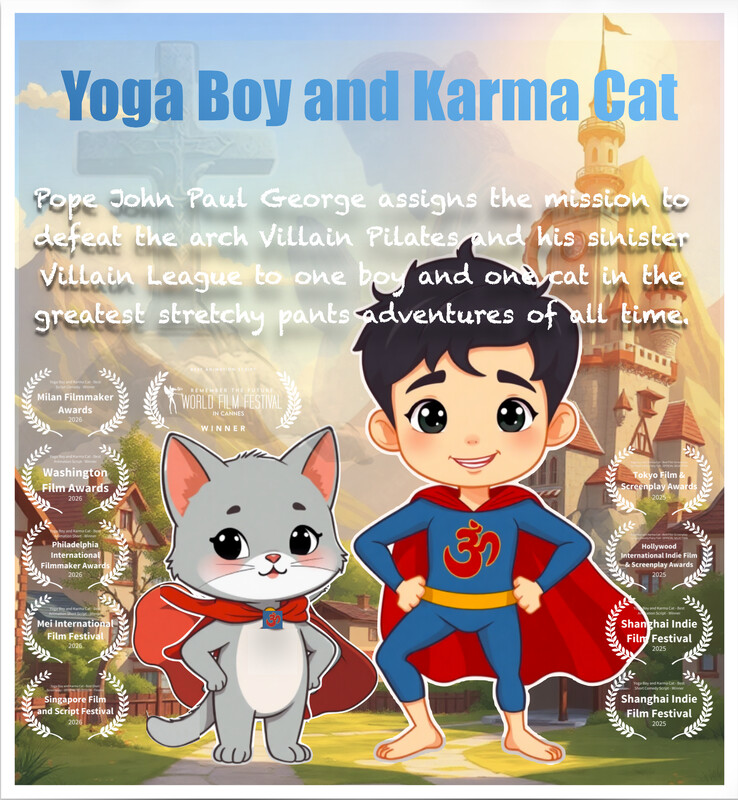
Yoga Boy and Karma Cat
Synopsis
Yoga Boy and Karma Cat meet Pope John Paul George and his dog Ringo to receive a mission to defeat the arch villain Pilates and his sinister Villain League in order to rescue a poor handicapped boy Mark Stolarski who has been kidnapped.
The cartoon is embedded in the Award winning feature Screenplay The Magic Man. All the characters in the cartoon are expansions of the psychology, internal struggles, outrageous tastes, and character traits of the real life handicapped schizophrenic boy Mark Stolarski. Yoga Boy is an idealized version of what Mark aspires to be without the handicaps.
Writer Biography
Born Rudolph Rajendra Tikaram Ramdyal to parents Bejai Lakshmi and Deodat Tikaram Ramdyal.He performed as an actor in youth in plays and short films which he wrote and directed. In high school he got A grades in sciences, as well as in dramatic arts and film production, for the short plays and films he wrote and directed. He received two standing ovations from his English and Film class after screening his first film Key to the Passage of Time (1983), a short action sci-fi. His film professor Neil Anderson, who studied at UCLA, thought his first film was the best he had ever seen from a student, and was sure he was headed for a career in Hollywood film.He studied Psychology, Economics, and Film Production at the University of Toronto and then York University. Although he began in the film program he preferred the practicality of a degree in Psychology and Economics. He acquired a Bachelor of Arts in Psychology and graduated on the Deans Honour Roll.After two decades working on Hollywood films he has multiple operational certifications in film production, government regulations, safety, supervision, and specialized Hollywood industrial equipment use.He is an emeritus member of the University of Toronto’s Heart House Film Board, and L.I.F.T. (the Liaison of Independent Filmmakers).He Wrote, Directed, and Edited several short films including Key to the Passage of Time (1983), The Prefect Terminator (1986), Paradise Unfolded (1992), The Accomplice (1993), Musk for Men (1986). He also edited comedy documentaries and skits for the crew Halloween competition on their time off from filming the hit NBC Universal TV show Kravaťáci (2011).As a teenager he practiced chemistry in his mother’s garage which he used to manufacture smoke effects that made his eyes water when he tried to operate the camera. He also made squibs simulating bullet impacts, exploding cigarette effects simulating tiny rockets inside, for his short film Key to the Passage of Time (1983).He won a few science contests as a youngster and entered on various subjects, including electricity, magnets, motors, rocket propulsion, volcanoes, and nuclear energy. One contest which he won involved a cash prize and a write-up in a small local paper featuring him explaining his models and theories on energy savings through housing design and applied scienceHe has written several Writers Guild Registered Feature Screenplays and TV pilots, for which he has won several Awards at various international festivals. His first unregistered Feature Screenplay was stolen and made into a low budget TV film without him.Fresh out of University, he worked briefly as a Psychiatric Field Worker. The parents of one of his clients recounted their childhood experiences to him of World War 2 concentration camps and Christian orphanages on land donated by a Maharaja. They gave him exclusive rights to their story and use of their name on which one of his Award Winning Screenplays, The Magic Man, is based.He is a voting member of the Academy in Canada.He is also credited as Roger Tikeram on his early short films, Roger Durhanto when he worked as crew, and Rudolph Rajendra Durhanto on some awards he has received.He has also engaged in securities and derivative investing. He was an early retail investor of Apple Computer after Steve Jobs returned to the company, and participated in voting Al Gore onto the Board of Directors, hoping it would help the small growing company to be more environmentally responsible in its manufacturing processes. He was also a retail investor of Tesla and participated in voting for Elon Musk’s record $50 Billion dollar compensation package, which was later reversed by the court due to lack of independence of the board, and inadequate shareholder information. He transitioned away from working as a crew member on Hollywood films, which he considered to be valuable training, in order to focus more on investments.While studying film in University he desired a one-of-a-kind name for easy recognition, and changed his last name to Durhanto. Dur – meaning ‘difficult’ in Sanskrit, Han – meaning ‘to conquer or overcome’, and TO – because he grew up in Toronto. Until recently he was the only person with that name. His conservative Kshatriya grandmother was greatly offended by his name change. To prevent further insult to his grandmother he prefers Rudolph Rajendra or simply Raj, which film crews know him by.– IMDb mini biography by: Rudolph Rajendra
-

Eternal Life
Synopsis
Waking in a future with floating cities topping thousands of stories, run by radioactive intelligence, where imagination blends with machine, an amnesiac finds her destiny.
Writer Biography
Jaaered (pronounced Jared) painted houses for a living, then moved on to art school, where he learned he could write.
Jaaered is also the 79th member of the “WORLD GENIUS DIRECTORY”.
-

Time
Synopsis
After trying their luck at rock and roll fame, 4 friends embark on a hilarious journey to get their fame and fortune.
Writer Biography
My parents were working folks. I grew up the youngest of two brothers in a small rural town in New Mexico. I started playing golf atb4 years old and began working as a caddie at 8 years old. My dad has been in entertainment my whole life. I am the first of my family to do the following:get a golf scholarship to an NCAA school,work as a stage hand at The Super Bowl,first to be an NPR radio show host,first to be a musical guest on a network late night show,first to perform as an actor/stand in/ photo double in +30 tv shows and movies. And yes my family has supported and stood by me through all of these accomplishments. I am so happy to be sharing my efforts with you all.
-
Flame of the Iceni
Synopsis
Daughter of Boudica and heir to the Iceni throne, Aeronwen has little love for the Roman forces occupying Britannia. Despite a promise of peace, when she and her people are brutally betrayed it becomes clear that a peaceful alliance can never hold.Can she unite their people in a victory against Rome before their way of life is annihilated forever…
Writer Biography
Find out more about Laura at www.LauraJHarris.com.
-
Proclamation 2526
Synopsis
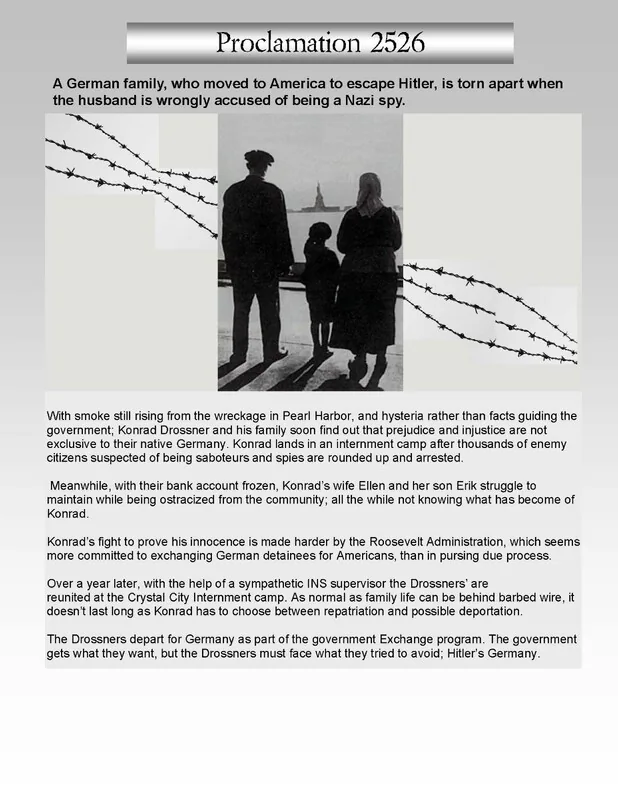
In the tumultuous era of World War II, “Proclamation 2526” explores the compelling and untold story of a group of enemy aliens – German and Japanese immigrants – whose lives become intertwined in an internment camp. As they grapple with fear, prejudice, and the loss of freedom, an unlikely alliance forms, challenging societal norms and revealing the resilience of the human spirit against the backdrop of war.
Writer Biography
Rich Nagle’s journey through storytelling began at a young age, first crafting tales to explain mishaps, like breaking his mom’s favorite vase, and later through writing lyrics and collaborating with band members during his high school years. His passion for storytelling extended into music, where he wrote and recorded numerous songs, a form of expression that remains with him today.
Theatre became another key avenue for Rich’s creativity. He acted in high school, continued performing in college, and later joined local community theatre. Notably, he played the Duke of Norfolk in “A Man for All Seasons” and the ominous Jack Manningham in “GASLIGHT.” His foray into directing came with “Come Blow Your Horn,” marking his directorial debut. During college, Rich had the privilege of studying underSydney H. Spayde, a respected figure in theatre as an author, director, and educator at the University of Iowa.
As his love for theatre grew, writing plays became a natural extension of his storytelling passion. He ventured into screenwriting, writing several screenplays and stage plays.
Among them are “Proclamation 2526,” a historical play, “Alternate Ending,” a dramedy, and “Jump or Fall”, a one act stage and radio play. Through these projects, Rich continues to channel his rich imagination and storytelling expertise into various artistic forms.
-
Integrity Brotherhood
Synopsis
Noah Strandlund, a young, deeply insecure ex-vangelical in the midst of a faith crisis, dreams of marrying his childhood sweetheart, Anna. Upon asking her parents for her hand in marriage, Anna’s father invites him first to attend a Christian men’s retreat at an abandoned compound in the middle of the woods. When Noah discovers the group is led by Paul, a shadowy figure from his past, he is pushed to his limits, sacrificing his mental and physical health to meet the group’s toxic standards of manhood. As Noah falls further into Paul’s rabbit hole of deceit, he uncovers a seedy underbelly of Christian Nationalism and must fight his way out to save his loved ones and himself.
-

A HIGHER CALL
Synopsis
WWII Drama about the two pilots, one a B-17 bomber pilot on his first mission over Germany and a German Ace who finds the severely damaged bomber limping out of Germany all alone. Instead of shooting down the bomber and getting his Knight’s Cross the German pilot, being a strict Catholic, takes mercy on the few remaining American flyers and instead shooting them down he guides out of Germany and toward England over the North Sea. The two pilots meet in 1990 and become friends for life.
Writer Biography
“Mike Ross
aspengrovemovies.com
mikeaspen@aol.com”“Down The Colorado is an epic adventure drama about Major John Wesley Powell’s 1869 expedition down the Colorado River. Ten men in four small boats endure a 100 day saga of survival against nature and themselves with only six surviving the whole harrowing ordeal.Black List: Down The Colorado is a powerful and well-engineered period drama. There is solid control of the craft.Nick Clement Independent Coverage: Damn good piece of writing!Greenlight Coverage: 7.8 – RecommendFinalist: 2025 Palm Springs International Film Festival Screenplay ContestOfficial Selection: 2025 Berlin International Screenwriting Festival”“A Higher Call is a WWII drama about two pilots who meet over the war-torn skies of Germany, one a B-17 bomber pilot on his first mission and the other a fighter pilot looking for one more kill for his Knight’s Cross. Seeing the condition of the American bomber crew and the condition of their plane, the German pilot takes mercy on them and leads them out over the North Sea and back toward England. The pilots meet after the war and become close friends for life.New York Times Best SellerGreenlight Coverage: 8.2 – Recommend”“Operation Vengeance is a WWII drama about a young American fighter pilot who is given the most top-secret mission in the South Pacific… to fly the longest aerial intercept in aviation history and shoot down the Japanese Supreme Commander In Chief, Admiral Isoroku Yamamoto, the mastermind of the attack on Pearl Harbor.The Black List: …well-written and well-researched… riveting…With the attachment of just one A-list star or a notable director, this project could probably easily gain the traction required to secure funding.Independent Contest Reader Reports: Operation Vengeance is a riveting World War II story that had me hooked from beginning to end.Easily the best script I’ve read in a long time!Greenlight Coverage: 7.3″“Drying Grass Moon is a large canvas western drama ala John Ford and John Wayne where Major George Forsyth and his band of 50 hard ass plainsmen pursue the great Cheyenne war chief, Roman Nose. When they find him, he is encamped with 5,000 Cheyenne, Sioux and Arapahoe and after three epic battles the future of the American west is changed forever.The Black List: Ultimately, this is a potentially powerful Western, and producers should take note of the writer as one to watch.Nick Clement Independent Coverage: The battle sequences are riveting, there’s probably no battle sequences on this scale in the western genre. This is large scale spectacle fitting of the big screen. This is all sprawling and epic.Greenlight Coverage: 7.4″“Mike Ross
aspengrovemovies.com
mikeaspen@aol.com”“Crossover is a faith-based drama about a lady real estate broker who experiences three near-death experiences only to learn that we all have earthly missions to complete before our entry into Heaven.The Black List: The writer paints an authentic atmosphere following Emma’s haunting journey. The supernatural elements provide a sense of adventure to the drama. The spiritual conflicts are easy to understand. The writer smartly leaves the audience with a positive, hopeful finale.Greenlight Coverage: 7.6 – Recommend”“Snow Angel is a rom com set in the world of big-name entertainment where Angel, a superstar-diva-pop-star, gets snow bound in a large Lake Tahoe house with the Harrah’s Lake Tahoe stage manager. From conflict blooms love and passion.Greenlight Coverage: 7.0″“Phantom Blues is a musical bio drama about the life and mysterious death of legendary 1930s Delta Bluesman, Robert Johnson, whose music still influences musicians today such as; The Rolling Stones, ZZ Top, Eric Clapton, The Beatles, John Mellencamp and many, many others.Greenlight Coverage: 7.7 – Recommend WINNER: Table Read My Screenplay Contest WINNER: Best Voice Of Color Screenplay Contest”“The Brand Inspector is modern day western/gold heist where a former rodeo hall of famer who is now a Nevada Livestock Brand Inspector gets involved in the pursuit of two desperate brothers after they rob the modern day stage coach, the Wells Fargo armored car, of its $20M in gold and escaped into the mountain wilderness on horseback.The Black List: “The Brand Inspector” is a rich and compelling modern western with strong action and dynamic characters.Nick Clement Independent Coverage: The Brand Inspector is an engaging, should-be-blockbuster.Greenlight Coverage: 6.8Winner: The Wild Bunch Film Festival—Best Modern Western Screenplay”“Backstage is a drama series about a beautiful second-generation dancer who dreams of stardom on the Las Vegas Strip.The first three episodes are written with three seasons outlined. Based on the authors career in big time Nevada show business.”“Neon Dancer is a feature length drama based on the streaming series, Backstage.The Black List: The most engaging element of the story is how the script succeeds in immersing audiences in the world’s fine details, to help build a stronger bond with the narrative. Las Vegas presents a great location for desperately ambitious characters to chase their goals.Greenlight Coverage: 6.7″
-
Stay With Me
Synopsis
Lena, a Russian Jewish woman who is a graduate student, leaves her religious husband and travels from Seattle to Jerusalem in search of forgotten manuscripts of a Russian writer. She fortuitously finds the writer’s daughter, and they become close friends. Lena’s husband resists divorcing her, and she struggles with the ambiguity of her situation, especially after she meets and falls in love with someone who is unlike her husband. Eventually she is transformed by the atmosphere of Jerusalem where she finds her own passion and purpose.
Writer Biography
Irina is a University of Washington graduate, with a M.A in comparative literature and a certificate in screenwriting. She lives in Seattle and writes poetry and prose.
-
The Crusade of the Godkiller
Synopsis
Adrian wanders the town, which is depressing, cold, and merciless, without any fear. Thieves, bandits, mercenaries, and violent criminals run amok without any care in the world. Sick of the current state of the world, Adrian decides it’s time for a change. If God himself won’t do anything about it, Adrian will! Knowing he’s just human, he realizes he will need the power of God to accomplish his goals. He sets off on adventures to find weapons and artifacts that will help him on his quest, but realizes he’s going to need help finding more weapons. He begins his search for a man named Patrick Stillmoon, but comes across a bump in the road when he finds out he’s missing. This causes Adrian to stop what he’s doing and track him down. While looking for leads, the angel of death approaches Adrian and tells him he needs to hurry up with his plan because God announced he’s choosing his heir to the throne soon.
Needing some space to himself, Adrian goes to get some air on a tower and accidentally meets McKenna, Patrick’s niece. Adrian stops her from committing suicide so that she’ll help him, and ends up agreeing to help find her uncle. The two go to his last known location and begin searching, only to be caught off guard by restless souls, possessed corpses, and a haunted forest. While Adrian is having a fun time chopping down bodies left and right, McKenna is traumatized that she had to take her first life. The two end up finding a body that may or may not be Patrick’s and leave the forest with it. Unconvinced with his findings, Adrian has the body examined to see if it’s really Patrick Stillmoon.
-

51 INTERNATIONAL
Synopsis
Driven by the ghost of a tragic past, Toni, a quiet Albanian refugee living in Italy, thinks he has finally found safety for his wife and daughter. But his fragile peace is shattered when Colonel John—a ruthless operative from a covert wing of Area 51—frames him for a major drug crime. The Colonel’s terms are absolute: spend life in a maximum-security prison, or infiltrate the brutal Albanian Mafia syndicate to recover a downed, next-generation prototype drone.Forced into the neon-lit underworld of Tirana, Toni must navigate a deadly maze of blood, paranoia, and shifting loyalties alongside a hardened gangster who becomes his unexpected brother-in-arms. When a compromised phone call leads Toni to believe his family has been brutally executed by the syndicate, his mission transforms into a cold, suicidal blood feud. Weapons hot and completely off the grid, Toni launches a one-man war to destroy the mafia’s empire, unaware that his survival depends on an obsolete, analog burner phone—and a final, staggering deception orchestrated by the government itself.
Writer Biography
Dritan Carku is an engineer, storyteller, and writer whose creative vision is deeply anchored in real-world stakes and profound personal experience.Born on May 5, 1972, in Tirana, the capital of Albania, Carku pursued a rigorous technical education, graduating with a degree in Engineering from the University of Tirana, where he studied from 1991 to 1996. This background instilled in him a sharp eye for structural precision, mechanics, and tactical logic—qualities that now define the gritty, detailed realism of his narrative world.His life took a definitive turn during the late 1990s when he lived through the chaos of the Albanian Civil War. Standing as an indirect witness to history, Carku experienced firsthand the visceral tragedy, displacement, and human cost of conflict. In 1997, he emigrated to Italy, translating his survival into a relentless drive to build a new life while preserving the raw truth of the world he left behind.Splitting his time throughout the year in Los Angeles, Carku bridges the gap between European noir and Hollywood suspense. His writing, exemplified by his award-winning political thriller 51 International, uniquely pairs high-concept espionage and technical accuracy with the authentic emotional weight of an insider who knows exactly what it means to live in the shadows of history.
Writer Statement
Every thriller needs a core tension, but for me, 51 International is not just a high-concept espionage story—it is a narrative born from the structural echoes of my own life.Having trained as an engineer in Tirana, I have always been fascinated by how complex systems operate, how mechanics align, and how small failures can destabilize an entire structure. But my understanding of structural collapse ceased to be academic in the late 1990s, when I lived through the raw, unpredictable chaos of the Albanian Civil War. Witnessing the sudden breakdown of society, the displacement of families, and the pervasive climate of survival left an indelible mark on my perception of reality. When you look into the eyes of a conflict like that, you realize that history isn’t just made by governments; it is suffered by ordinary people who are forced into impossible choices.51 International is the creative collision of these two worlds. It juxtaposes the absolute, cold precision of 21st-century American military surveillance (Area 51) against the raw, visceral, and “analog” survival tactics of the Balkan criminal underworld. It examines what happens when a man is stripped of everything, framed by global superpowers, and forced to rely entirely on his instincts to protect the people he loves.This story doesn’t just borrow from the aesthetic of European noir and cinematic tension; it draws from an authentic emotional truth. I wanted to write a relentless, high-stakes thriller that moves with the kinetic energy of The Bourne Identity and the gritty realism of Gomorra, but at its heart, it remains an intimate study of survival, accountability, and redemption. I wrote this because I know the setting, I know the stakes, and I know the quiet desperation of a man fighting to rewrite a past that is constantly trying to destroy his future.
-
Aurora Sky
Synopsis
“When her husband suddenly and mysteriously dies ontheir wedding day, Noor is haunted by Aster’s apparition. Astrange man, reappearing in her wake, convinces Noor tojourney to the ‘Underworld’ and bring him back to life; butwith a baby on the way, and the forces of fate to contendwith, Noor must resist temptation to look back. Aninterpretation of the Orpheus myth in 2024.”
-

FEMALE
Synopsis
A character driving psychological drama for a woman who finds herself trapped between a traumatic past and a hard present that begins to unravel. As buried secrets resurface and those closest to her turn against her, she must fight to reclaim her voice, her sanity, and her freedom, before she loses everything. Inspired from real events centered on contemporary social issues around women.
Writer Biography
An Emerging Screenwriter and assistant journalist on red carpet Premiers in London, with multiple studies in bussines with a BA in bussines from CCC University, bussines Certificates awarded from Harvard University and Certificate in Screenwriting from Cambridge University.
Writer Statement
Storytelling has always lived within me. Through writing I express myself, emotion, vulnerability, and the unspoken layers of the human experience. Writing allows me to give voice to the soul, and I am committed to devoting myself wholeheartedly to this art.
-
Broken Hearts
Writer Biography
Luke Ollerton is a UK-based writer and filmmaker specialising in horror, thriller, and horror-comedy. His work blends character-driven storytelling with genre tension and dark humour. His screenplay Walker’s Game and its proof-of-concept short have received multiple international festival selections and awards.
-

I.D.
Synopsis
A psychological thriller of a young black male, who was raised by both parents and lived a so called “normal life”. His life is peaceful, no violence, no confrontations….But certain events occur in his life that start to alter the way he thinks. Eventually, these events start to create another person. A person that he doesn’t even knows that exists. A person that was well hidden in his past. A person that loves violence and encourages confrontations. Now he has to make the decision of getting help or succumbing to the alter ego that has grown within him.
Writer Biography
I’m a native from Bridgeport, CT. I went to college in Atlanta, GA in 2002. I attended Clark Atlanta University for 2 years and continued my education and graduated with a BA in Media Production from American InterContinental University in 2006.
After graduation, I tried to get into filmmaking while looking for a job to pay bills. I’ve worked on a couple of music video sets as a cable grip but that is as far as it went. Being in Atlanta at the time, the industry was not really looking for little experience from people.
I posted my resume in all 50 states and got lucky with getting a full time job at A&E Television Networks in Stamford, CT as a Digital Encoder in 2007. I got promoted to Associate Producer and then Digital Video Producer within 2 years and was working this position until 2016. At this time I decided to go for another career, which is my current career. I’m a Firefighter for my city of Bridgeport, CT and love this job.
During the pandemic, a couple of close family members tested positive for COVID-19 and passed away. Having close contact with them, made me quarantine for 14 days. During my quarantine, I was separated from my 2 children and my girlfriend. All I had close to me were books to read, my phone to video chat, movies to stream and my laptop. I would read for a few hours then watch movies and my passion for trying to write again came around and I began to write and create ideas for feature films.
Writer Statement
I always loved this statement made by Quentin Tarantino,
“You don’t have to know how to make a movie. If you truly love cinema with all your heart and with enough passion, you can’t help but make a good movie.”
-

4 DEVILISH WOMEN
Synopsis
In Buenos Aires, four women working in male-dominated professions unexpectedly become public figures after an academic event. What begins as media acclaim turns into brutal scrutiny of their private lives: an engineer prone to alcoholism, a port manager accused of being a bad mother, a lawyer with multiple lovers, and a unionized mechanic. United in adversity, they confront the fragility and strength of being women in a society that applauds and punishes them at the same time.
Writer Biography
Mexicana de nacimiento en 1971 en la Ciudad de México, pero Argentina por adopción en 2013. Economista especializada en Proyectos de Inversión Productiva y Economía Cultural, Egresada y Docente de la UNAM en México hasta 1997, y actualmente Docente en el Gobierno de la Ciudad de Buenos Aires en carreras de Marketing, Administración y Análisis de Sistemas. También trabaja en el Instituto Nacional de Tecnología Industrial (INTI) como analista senior económica-financiera de proyectos de inversión, compras y contrataciones. Asimismo, ha realizado estudios sobre escritura, guionismo y literatura, y realizo un máster en Madrid España sobre Producción Audiovisual en Guionismo en The Core School actualmente.
Writer Statement
“Con esta serie quiero mostrar el precio real de ser mujer en un mundo que celebra a las que triunfan… pero castiga a las que no cumplen los roles que se esperan de ellas. Cuatro Mujeres Endiabladas no busca idealizar, sino mostrar contradicciones y fragilidades con humanidad y verdad. Buenos Aires… vibrante y contradictoria… será un personaje más en esta historia.”
-
Ghosts of Roe
Synopsis
Alice Myers is raped in the post Roe south. Things only get worse until she runs…and fights.
-

MIGRANTS (2026)
Synopsis
After cartel violence shatters her family in Honduras, a headstrong teenage girl leads them on a perilous journey to the United States, but when cartel killers close in and Texas vigilantes capture them, her need for control threatens their survival—until she turns the tables on both.
-
The Magician
Synopsis
The story follows a mysterious, lean biker known as “The Magician” who arrives in a small, quiet village. Armed with an uncanny ability to manipulate reality through “magic” and psychological insight, he begins by humbling local bullies and corrupt officials without ever resorting to violence. His arrival is no coincidence: he has come to dismantle a web of judicial corruption. By allowing himself to be arrested and sent to a high-security prison, he infiltrates the system to prove the innocence of Juan Carrion, an elderly man wrongfully imprisoned for decades. Through a series of impossible feats and strategic “illusions,” the Magician exposes the true criminals, secures Juan’s freedom, and vanishes as suddenly as he appeared, leaving the world to wonder if he was a man or a miracle.
-
The Ward
Synopsis
Snapshot of the Script – The Ward
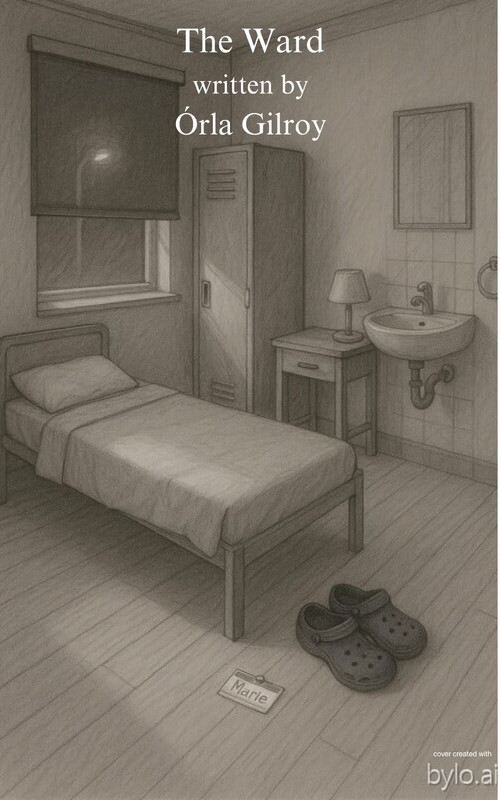
The Ward is a powerful debut play set within the intimate confines of an Irish hospital, unfolding against the backdrop of ongoing anti-abortion protests outside its doors.
Told through a series of interconnected scenes, the drama follows patients, families, visitors, and healthcare staff—each carrying private struggles while navigating the weight of pain, grief, compassion and judgement.
It explores themes of relationships, grief, faith, social activism, personal trauma and the complexities of aspects that some women face-revealing fragile human stories both at the bedside and beyond the hospital walls.
Combining raw realism with moments of poignant reflection, The Ward captures the often-unseen struggles of individuals facing life-altering circumstances.
With a diverse cast and dynamic scene design, it challenges audiences to confront difficult truths about societal divisions, personal loss, and the enduring human capacity for empathy.
Scenes move seamlessly between intimate wards, private turmoils, fragile relationships, unspoken sadness and the voices of protestors echoing from outside, building a layered tension between public judgment and private pain.
At its heart, The Ward is about loss, resilience, and the quiet strength found in human connection—even when society feels most divided how do we care for one another when grief, belief, and silence collide within the most vulnerable spaces of life.
Writer Biography
Órla Gilroy is an emerging writer whose voice is shaped by resilience and truth.
After being diagnosed with breast cancer at the end of 2022, she underwent two surgeries and radiation while navigating challenging personal circumstances.
Throughout this, Órla continued working and promised herself when she recovered, she would finally pursue passions she had put aside.
As part of that promise, she has taken this first courageous, creative step—writing her debut script, The Ward, and submitting it here.
Writer Statement
The Ward was born out of my own experience of navigating illness, loss, and resilience in the face of personal adversity.
At the end of 2022, I was diagnosed with breast cancer. The period that followed included surgeries, radiation, while continuing to work, and facing difficult personal circumstances.
This tested me—physically, emotionally —but reminded me and clarified what matters most. I promised myself, when I recovered, I would no longer put aside the things I wanted to do. Writing this play is part of that promise. (The play does not factor in cancer)
Hospitals are places where life and death, hope and despair, faith and fear sit side by side. They are intimate spaces, often silent places where people must reveal their most vulnerable truths. They are also institutions caught in bureaucracy, politics, and social conflict.
In The Ward, I wanted to explore how private pain collides with public judgment, and how individuals, in their fragility, still find ways to hold onto compassion and human connection- how important that is- how we all need this. no matter who we are.
Through a series of interconnected scenes, the play moves between the lives of patients, families, visitors, healthcare staff, and protestors outside the hospital doors.
Each carries their own story of loss, trauma, or conviction.
In bringing these stories together, I wanted to highlight not only the fractures in our society—around faith, activism, and women’s choices—but also quiet strength, empathy, and resilience.
As this is my first script, the act of writing The Ward has been terrifying but liberating. It took courage to put pen to paper, to write this, and even more courage to share it. But, doing so reaffirmed the importance of truth —truth that does not shy away from discomfort- truth that asks us to listen, reflect, and perhaps see some something in those we might not otherwise understand.
At its heart, The Ward is a play about grief, resilience, and the fragile yet powerful threads of kindness and connection that hold us together, silently, quietly, in the most difficult of times.
-
Duffy's Cut
Synopsis
Duffy’s Cut–Based on the true story of murder on the Main Line. “In June of 1832, after a nearly three-month sail from Ireland aboard the ship John Stamp, 57 men and two women arrived in Philadelphia with hopes of finding work and beginning a new life in the United States. Just six weeks later they were savagely killed along the very stretch of the Main Line track they were hired to build. Their families back in Ireland would never learn their tragic fate or hear from them again.” by Virginia Lindak OCTOBER 28, 2020
The Black Bottom– My screenplay, “The Black Bottom” is based on the true story of gentrification and urban renewal in Philadelphia, PA and what can best be described as controlled, governmental ethnic neighborhood elimination and intimidation in the late 1960’s. I hope the story shows how helpless and vulnerable people can be when they don’t anticipate their own fate, or appreciate the malice, vindictiveness and jealousy which surrounds them. We must all guard against, unfettered and unchecked hatred against any people, or race. When that type of circumstance is revealed and we all stand up and fight, we can champion evil and make life right again.
Writer Biography
Linda Collier, B.A., M.S., J.D. Professor at Delaware County Community College. I currently occupy the position of Professor in the Business and Social Science Division. I am an attorney who is currently inactive I regularly teach Business Law, Poli Sci, Paralegal Studies, and Criminal Justice. I am a prolific writer and researcher of legal issues and continue to stand up and support just causes. My joy comes from seeing students succeed and excel in their Academic work.
Writer Statement
I have been writing since 1974 abd was once a weekly Columnist for the Phila Tribune, and a writer for Inquirer and other papers in the area. I also wrote for Washington Post- see- https://www.washingtonpost.com/archive/opinions/1998/03/29/adult-crime-adult-time/cf4f38c6-3afe-471e-8977-d58120a07b4d/
-
Pretty Little Lucy
Synopsis
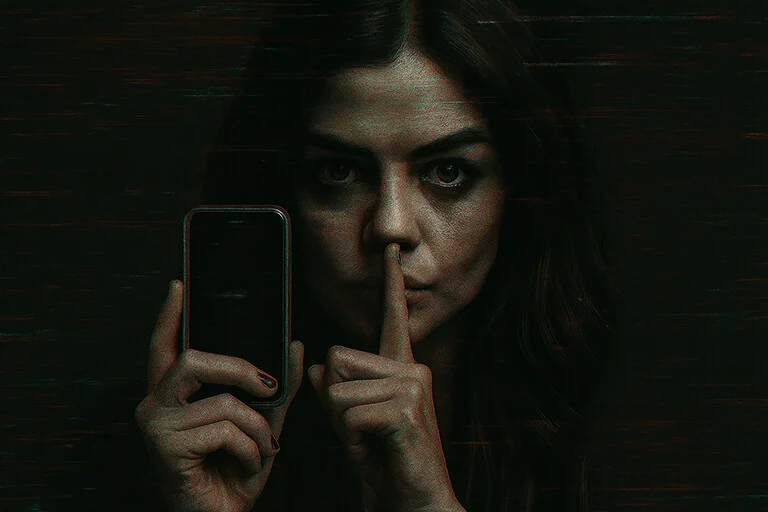
(DRAFT 9) When a lonely pharmacy tech is catfished by someone impersonating actress Lucy Hale, he spirals into an obsessive digital romance that blurs the line between fantasy and delusion. As his life unravels, the only voice that seems to understand him is Aria Montgomery—Hale’s fictional alter ego—who may not be real, but speaks to the ache no one else sees.
Writer Biography
David B. Williamson is a screenwriter and founder of Ddubbs Wicked Creations, known for bold, emotionally intelligent, and psychologically complex storytelling that lingers long after the credits roll. His work blends character-driven drama, psychological thrillers, and genre-bending horror with a deep understanding of human behavior, trauma, and redemption. Williamson’s breakout screenplay, Pretty Little Lucy, is a psychological drama about digital deception, obsession, and the blurred lines between reality and fantasy. Inspired by a real-life catfishing incident, the film has been praised in industry coverage for its emotional depth, unique 15-day spiral structure, and commercial viability. Backed by a sustained multi-platform marketing campaign, Pretty Little Lucy has gained measurable online traction, generating thousands of views, high engagement rates, and growing interest from producers and executives.
Under the Ddubbs Wicked Creations banner, Williamson has built a diverse portfolio of market-ready projects, including:
Eastern State – A supernatural thriller set inside a haunted, for-profit penitentiary. The Lady and the Lantern – A gothic horror steeped in atmosphere and dread. Backlash – A drama about identity, AI manipulation, and the fragility of self. Steel Pride – A bold queer slasher. The Curse of the Mad Butcher – A Rust Belt–rooted slasher film with a cult appeal. A data-driven creative entrepreneur, Williamson actively integrates marketing, audience development, and brand positioning into his filmmaking approach, ensuring his projects are not only creatively strong but commercially primed. His work has attracted attention from industry professionals at LES IS MORE ENTERTAINMENT, The SpringHill Company, and other production entities, aligning with his vision of bringing emotionally charged, socially resonant stories to a global audience. Specialties: Psychological thrillers, character-driven drama, horror, non-linear storytelling, audience engagement campaigns, pitch strategy, creative brand building. Availability: Open to collaboration, development deals, and production partnerships for both feature and series formats.
Writer Statement
Pretty Little Lucy is a psychological drama about digital intimacy, loneliness, and the emotional cost of being unseen. Inspired by a real catfishing encounter I intentionally explored to understand the psychology of deception, the story became both an investigation and a confession—a mirror held up to modern isolation. At its core, the film is not about the scam itself, but about what makes someone want to believe. It’s about the quiet ache of connection in an age defined by curated personas and digital ghosts. Through David’s descent into obsession and fantasy, I wanted to confront how technology reshapes empathy, how delusion can masquerade as love, and how storytelling becomes the only honest way to survive the silence that follows. Visually, Pretty Little Lucy exists between grounded realism and surreal delusion—one moment intimate and fragile, the next fractured by glitch and dream. The film’s tone honors psychological cinema in the lineage of One Hour Photo, Black Swan, and Her stories where longing becomes the antagonist. I wrote this not as a victim, but as a storyteller reclaiming the narrative. What began as an online deception evolved into a deeply human exploration of truth, vulnerability, and creative rebirth. For fifteen days, my protagonist loses himself in a lie. For two hours, I invite the audience to see how beautiful—and how dangerous—that lie can feel.
-
The Disruptor
Synopsis
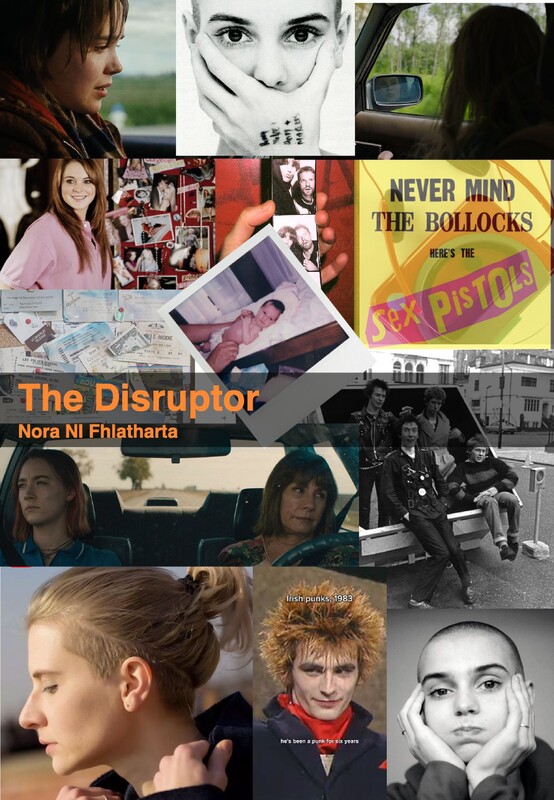
Ireland is bruised and restless in the wake of Sinead O’Connor’s public denunciation of clerical abuse; private grief and public dissent press at every door. In a stark mother and baby home, Deirdre, a 16-year-old girl with shaved sides and chipped black nails, clutches her Walkman filled with mixed tapes like a rosary as she gives birth alone. A nurse with a crucifix captures the moment with a Polaroid, while the staff moves with the practiced efficiency of those trained to tidy away inconvenient lives. Adoption paperwork is already being prepared as Deirdre leaves, hollowed and furious, the Polaroid a thin yet irrefutable claim on what they intend to take from her.
Lona, 37, is sent to collect Deirdre. This task should be routine: drive the teenager from the gates of Bessborough in Cork straight back to Connemara to finalise the adoption papers, marking one last duty before Lona retreats to the convent on Lough Derg. However, Lona’s past complicates this straightforward journey. As a teen, she fronted a London Irish punk band called The Disruptors. Amidst a whirlwind of drinking and parties, she fell in love with Diarmuid. After his tragic overdose left her pregnant and addicted, Lona was taken in by Sister Claude’s home, where she got clean, surrendered her baby, and has carried the weight of guilt and shame ever since. Twenty years of convent obedience have steadied her life, but the noisy remnants of her past still resonate within her; her conviction is fraying. Thus, what should be a simple drive becomes fraught with emotional tension.
Their journey takes them through the picturesque yet haunting landscape of rural Ireland, characterised by inland villages, small shops, peat smoke, parish churches, and narrow lanes. Each early stop seems incidental, but soon the trip pivots dramatically: a prescription mix-up at Clooney’s Chemist swaps the proscribed sleeping pills for Vitamin D, leaving Deirdre completely alert and continuously stalling to buy more time. At The Loftus Lounge, Áine and a back room filled with line-dancing middle-aged women offer blunt yet tender support, tea, sandwiches, and an unyielding refusal to moralise. On a single-track lane, a slow puncture forces a stop at Deacy’s Garage, where a blind proprietor and his 21yr old grandson offer wry counsel and quiet reflection.
Between these waypoints, the car transforms into a confessional. Deirdre reveals that she slipped into the hospital nursery to breastfeed her baby, a secret that embodies both shame and fierce maternal instinct, turning the trip from procedural to deeply personal. Soon after, Deirdre’s condition deteriorates: postpartum trauma sets in, bringing bleeding, pain, and the agony of her leaking breasts, making the straight run to Connemara impossible. Lona, who initially planned only to return with signed papers, is compelled by urgency and compassion to seek practical help.
They veer toward the sea to Imbolc, Sister Marlene’s cottage in the Burren. As they arrive, the view opens up: from Imbolc, Galway Bay spills below, and across the water, Connemara rises on the far shore, a destination that has felt ephemeral until now. Marlene, a former nun in her late sixties, has traded clerical paperwork for apothecary jars and discreet midwifery. Her stone cottage, filled with herbs and music, offers care without the weight of bureaucracy. She tends to Deirdre’s bleeding, binds her wounds, soothes her discomfort, and applies herbal compresses, treating her trauma with tender professionalism. Imbolc becomes a liminal refuge, where immediate bodily needs are met while the machinery of adoption fades away amidst human presence and tactical delay.
Music serves as a thread that connects the three women. Marlene hums 1960s ballads and sean nós lullabies; Lona brings the clipped refrains and rebellious anthems of punk; and Deirdre’s inner soundtrack resonates with early ’90s grunge and the haunting melodies of Sinead O’Connor. They share songs like precious memories, building a collective vocabulary across generations. Lona’s punk past emerges as unexpected tenderness; the voice that once shouted against authority now uses her knowledge and fierce protectiveness to shelter a mother. Her own lost child and the death of Diarmuid fuel a particular ferocity, she cannot stand by while another life is at risk.
When they finally return across the bay toward Connemara, the unsightly 1980s bungalow on the mountainside awaits, boxy and flat against the wild landscape. Inside the “good room,” filled with stiff sofas and lace doilies, the family is assembled. Peggy sits primly in her armchair to the left of the fireplace; Tommy perches on a low footstool directly in front of the hearth; Stephen reclines regally in his throne-like armchair to the right, a broadsheet across his knees. Barbara meets them at the door with an expectant, hard expression. The household conversation quickly devolves into practical cruelty: talk of adoption, fear of scandal, and calculations about reputation.
Tommy’s presence fractures their tidy narrative. He and Deirdre exchange a private signal, a reminder of small rebellions shared throughout their childhood. Summoning her courage, Deirdre stands and declares, “I’m keeping the baby,” her words landing with the heaviness of a damp sod, scattering the fading embers of the Irish church-state and the society that were reared by it. The room erupts in chaos: Peggy pleads for practicality, Barbara catalogues the shame, and Stephen asserts duty like scripture, putting Deirdre and Lona’s resolve to the test.
This story is based on my lived experience as a teenage mother in Bessborough mother and baby home in the early 1990s. I refused to sign the adoption papers, was ostracized, but I kept my baby. My daughter Aoife is grown, married, and expecting her first child. I will be a grandmother. This is our story.
Music and Polaroid imagery roll over the end titles, culminating in The Disruptor’s uplifting conclusion: a child cherished, a mother embracing her journey, and three generations united by music and a shared commitment to redefine the narrative surrounding maternity and compassion.
Writer Biography
Nora Ni Fhlatharta is an Irish screenwriter based in Galway. Born and raised on a small rocky farm in the west of Ireland as the youngest of ten, she was drawn to folklore, Púcaí, and the Sídhe that wandered the hills. Books became her refuge, and her teenage days spent in the Galway City Library fuelled a lifelong passion for stories and magic realism. Nora holds two undergraduate degrees: one in Arts with a major in English and History from the University of Galway and another in Fine Arts with a major in Sculpture and Installation from the Technical University of the Atlantic. Emersed in story and trained in fine art, she seasoned her skills in theatre production with Galway Youth Theatre and found her home tribe in film. She furthered her education with a Master’s in Digital Media from the Huston School of Film at the University of Galway (2007). Nora wrote, produced, and edited the BAI and TG4 Anamhaíocht special Ar Thoir ar Granuaile (In Search of Granuaile) 2008 and created multiple community-rooted shorts with Galway Film Centre. Since 2009, she has lectured in Film at the Technical University of the Shannon.
Nora is currently developing her feature screenplay The Disruptor, which draws upon her own experiences as a teenage mother hidden away in a mother-and-baby home at 18. The narrative follows Deirdre, a young woman grappling with her past and societal pressures as she fights to keep her baby against challenges posed by religion, family expectations, and the institutional difficulties of the home. Selected for the Stowe Facing in Facing Out Development Programme with the Galway Film Fleadh in 2025, The Disruptor captures the intricate dynamics of betrayal, identity, and resilience, illuminating the sacrifices women make in their pursuit of success. The screenplay was also honoured with the Law Firm of Stacey A. Davis & Stowe Story Labs Fellowship Honourable Mention for 2026. Nora has also been granted a Screen Ireland Bursary to bring the Disruptor to Stowe Narrative Labs in Stowe, Vermont, USA June 2026.
Nora is also developing her television series Selkies, created during the Winter of 2025/2026 as part of the Writers Room programme with Stowe Writers Labs, led by showrunners Dereck Simmons and David Pope. Selkies follows Amira, a sixteen-year-old Sudanese refugee with a saltwater soul, posing the question: Who belongs to which land, and what must we be willing to do to prove it? The series explores belonging both personally and politically, examining how communities choose to shelter the vulnerable. Grounded in Connemara realism, it balances quiet domestic truth with uncanny menace, centring on relationships: a fisherman who reads the sea better than people, a trauma-informed doctor who struggles with the supernatural, and a group of teenagers who must grow morally.
The tension of personal care versus institutional violence drives the drama, as each episode challenges viewers to choose whom they will protect and what compromises they will accept. At its heart, Amira’s search for identity refracts our understanding of belonging and survival in a world at odds between sea and land. Selkies aims to tell a story that is both intimate and epic—a Connemara community forced to choose courage over fear, with flawed teenagers becoming reluctant protectors while facing corporate oceanic power that weaponizes ecological outrage into violence.
Nora’s latest short screenplay, Optimum, delves into the psychological complexities of motherhood and the societal pressures women face. The narrative follows a character navigating the expectations imposed on her while she tries to maintain her identity amid overwhelming responsibilities. Through this story, Nora explores the struggle to balance nurturing roles with the darker aspects of life that often remain hidden, reflecting the untold narratives of many women today. Optimum highlights the challenges of personal care versus societal expectations, inviting audiences to confront the nuances of motherhood in a fast-paced world.
Additionally, Nora’s screenplay The Bride Andromeda has received significant recognition as a nominee for Best Plot in a Short Script at the Horror Hound Film Festival in Cincinnati in March 2026 and has also been selected for the Catalyst International Film Festival Screenwriting Lab in April 2026 in Limerick, Ireland. In The Bride Andromeda, Ann, a timid bibliophile, harbours a deep-seated passion for Daniel, a Dungeons and Dragons nerd, and feels life is passing her by as she worries she will never have the perfect engagement story. When the elegant, mysterious Hermes enters her life, Ann becomes determined to secure his affections and begins to transform herself into a Gothic Andromeda, complete with a Victorian corset and sculpted hair. However, when Hermes, a charming vampire, grows bored with her superficial obsessions, he manipulates Ann into a ritual designed to make their “love” everlasting, leading to unexpected and comical consequences.
Overall, Nora’s diverse projects reflect her commitment to exploring the complexities of identity, resilience, and the societal pressures that shape women’s lives. As she continues her journey as a writer, she embraces the vision of storytelling that captures both the personal and the universal. Through her work, she seeks to resonate with audiences and provoke thought, illuminating the hidden stories within us all. I dream to write and write to dream.
Writer Statement
The Disruptor grows directly from my lived experience during a tumultuous period of my youth. At eighteen I entered a mother‑and‑baby home in secrecy, weighed down by stigma and fear. I refused to sign the adoption papers and kept my daughter, a choice that reshaped my life and the course of my family. We were punished for it: I was expelled from my family home and endured ostracism. Those hardships were real, costly and formative.
Sister Claude, a nun connected to the adoption agency made a decisive difference. She told me it was okay to say no; she helped me reclaim my voice and my motherhood. Without her, I do not know that I would have found the courage to stand up for myself and my child. This film is an act of thanks to her, and to the few who offered care inside a cruel system.
The Disruptor is both an act of witness and an attempt to map the complexity of love, shame, institutional power and small acts of resistance. It seeks to show how obedience is enforced, how compassion survives, and how ordinary people, women, neighbours, the marginalised can alter the machinery of control through steady, stubborn care. Above all it is personal: made in honour of the women who passed through Ireland’s mother & baby homes, and for my eldest daughter Aoife, whose life continues to teach and inspire me. I look forward now to becoming a very grateful grandmother this year.
Revealing the darkness of those institutions is part of the work of healing; this story is one small light in that work.
-

Child of Dawn
Synopsis
In the mystical realm of the Vale, where elves and vampires hold dominion, an ancient prophecy foretells impending destruction unless two unlikely heroes unite. A courageous elf and a reclusive vampire must overcome deep-seated prejudices and personal demons to fulfill their intertwined destinies. As they embark on a perilous journey, they confront formidable adversaries, unravel hidden truths, and discover a profound connection that could alter the fate of their world. “Child of Dawn” is a spellbinding tale of magic, love, and destiny, weaving a narrative that transcends reality and invites audiences into a world where ancient magic converges with contemporary challenges.
Writer Biography
Leslie Anne Lee has been writing since she was six years old, crafting tales on newsprint paper with crayons before graduating to pen and journal. Her passion for writing was evident from a young age, winning recognition in school for her short stories and poetry. By high school, Leslie had published her first novel, and as a college freshman, her poetry garnered recognition from her state senator. Now penning her eighth book, Leslie has also turned her focus to screenwriting – creating a second avenue for her stories to be brought to life. Leslie’s writing journey has been marked by determination and resilience. Even as a new mother, she penned her second book while bedridden with a fever. Her dedication to the craft has resulted in the publication of six books across various genres, and her poetry has been featured in several anthologies. Leslie credits her success to the encouragement and inspiration she received from her high school English and Drama teacher, Greg Stobbe, as well as the unwavering support of her family and friends. Her mother, who instilled in her a love of reading; her children, whom she wants to inspire and teach that anything is possible; and her friends, who have inspired, pushed, and motivated her to believe that she can and will be a successful author. When she’s not writing, Leslie enjoys contributing to local film non-profits, participating in red-carpet premieres, and nurturing her creative spirit through gardening, dancing, and helping her children make movies.
-

When Vengeance Wears Heels
Synopsis
In the gritty underworlds of 1930s New York City, Adreana Fezzuglio witnesses her father’s cold-blooded murder on her sixteenth birthday. A few years later she sings her way into the heart of a known mobster, Michael Milano. She finds out after she marries him and becomes pregnant with his child, that the man she married is her father’s killer. With methodical precision, Adreana gathers evidence while living the dangerous double life of a loyal mob wife and vengeful daughter. From speakeasies to the courtroom, her mission unfolds: To take down not only her husband, but the Biachi and Caprio mob families in which he’s involved.
Writer Biography
My name is Robert (Bob) Holton, and I write under the moniker of Bob Holton or G. R. Holton. In 2007, I became 100% disabled from the military, and so I turned to writing as therapy. My experience as a stage and film actor, as well as an award-winning author of six books, has helped elevate my screenwriting to the next level. I have six screenplays in various states of completion. When Vengeance Wears Heels is a completed and ready-for-submission piece. I also have four other screenplays, including Deep Screams, Teleported, Dragon’s Bow, and Souls on Brotherhood Hill, which are in various stages of completion. I can provide my resume upon request.
-

The Stained-Glass Window
Synopsis
LILY BRANNAN knows she’s in a rut. She has a case of writer’s block, can’t remember to grocery shop, and is having sex with her ex-husband which still tangles her conscience. Then HELEN passes away, leaving her a mysterious old house in Vermont. Lily drives up to see it and feels the spark she has been missing. This place could wake her up. She hires a handsome contractor, TOM GIVENS, to renovate the house. While at the local bakery, Lily runs into TIFFANY, who had been her childhood best friend, who she hasn’t seen since Helen took custody of Lily. Now, Lily knows this town is exactly where she’s supposed to be. Then she meets ROBERTO ROMANO, stunning and charming, and he sweeps her off her feet. But the house begins to seep into her dreams, full of shifting hallways and stained-glass light. One afternoon, while she is writing, Tom calls her upstairs to her future bedroom. He has pulled a hidden stained-glass window from the wall, and the moment Lily sees it, the world tilts, and she collapses in a dead faint.
-

Dark Twinkle Holiday
Synopsis
A group of strangers hired to go to a remote undeveloped suburb so they can create special 3D glasses for holiday events become trapped when a storm hits and at the same time, a murder occurs which leads to unraveling events as they try to figure out who the killer is after they discover that person can only be seen through their custom glasses and appears as different holiday themed images.
Writer Biography
Genevieve Sipperley is a screenwriter and author with multiple awards for a collection of her original screenplays. Along with being named an Emerging Screenwriter by the International Screenwriters Association and a Top 50 Fast Track Fellow, she has won Best Screenplay in several different film genres and has participated in dozens of accredited international film festivals to accept competition awards. Mediterranean Film Festival Cannes, Boston Screenplay Awards, The North Film Festival, International Horror Hotel Screenwriting Competition, Chicago Screenplay Awards, and the Silver State Film Festival are just some among that list. Genevieve also produces, publishes fiction work, and has films in post production.
-

The Campground
Synopsis
Claire must overcome the guilt of her past by locating her missing sister in a cursed campground, stalked by more than just a malevolent slasher.
Writer Biography
Brandon D. Reid is an award-winning screenwriter, photographer, and filmmaker based in Alberta, Canada. He began making films in 2006 and has accumulated various credits on over fifty student or independent projects since then. He has a Bachelor of Fine Arts in New Media, and attended the Vancouver Film School in 2018, where he earned an Honor’s Diploma in Writing for Film, Television, and Games.
He’s been a fan of horror since he was thirteen and has written several short scripts based on the genre, including Fear-in-the-Box, Final Draft, and The Stalker. Currently, he is expanding his portfolio by entering writing competitions for both short and feature films, and honing his analytical skills with the web series The First Ten Pages.
His endgame is writing feature-length horror films, such as his spec scripts The Campground and Penance.
-
Ricardo Fuentes of Chavez Ravine
Synopsis
The pilot for “The Missed Adventures of Dick Jones,” “Ricardo Fuentes of Chavez Ravine” introduces people important to Dick Jones’ life in 1934, and the happenstance leading him to escape Los Angeles for New York City.
-

Death in Poland
Synopsis
An unflinching, brutally honest portrayal of the Holocaust’s most infamous death camps, *Death in Poland* chronicles the systematic machinery of genocide through a series of interwoven scenes of cruelty, precision, and silence—where memory is the only thing left standing.
Writer Biography
Historian and screenwriter dedicated to telling stories with uncompromising historical accuracy and emotional weight. Known for meticulous archival research, stark realism, and a refusal to romanticize atrocities. Author of Death in Poland, a feature-length Holocaust screenplay that immerses audiences in the systemic, emotionless brutality of the Nazi extermination camps.
Writer Statement
Death in Poland was born from my determination to portray the Nazi death camps without the filters of sentiment, individual heroism, or narrative comfort. Too often, depictions of the Holocaust center on moments of hope or redemption. My aim was the opposite: to immerse the audience in the machinery of industrialized death, where the process itself—cold, detached, and efficient—becomes the protagonist.
I approached this story as a historian and a witness to testimony, constructing a film where silence is as potent as screams, where the camera lingers without moral commentary, and where perpetrators are shown not as monsters of passion but as bureaucrats of annihilation. By draining away sentiment, I hoped to strip the viewer of safe distance and force them into the unblinking reality of systemic cruelty.
This film is not meant to console. It is meant to haunt. My hope is that audiences will leave with an acute awareness of how easily humanity can be erased when empathy is removed from the equation—and how important it is that such erasure is never allowed to happen again.
-

Five Defiant Women
Synopsis
Vivianne Rosenberg, a Filipino-American screenwriter and member of SAG and WGA, weaves her rich cultural tapestry into compelling narratives that captivate audiences worldwide. Born in the Northwestern Visayan Islands of the Philippines, Vivianne and her family immigrated to San Francisco at age eight, carrying the essence of her heritage. Her adventurous spirit led her across the globe, from her roots in the Philippines to the United States, Japan, and the diverse landscapes of Europe. Each experience, whether working in banking or singing in a Japanese piano bar, has become a vital chapter in her story, fueling her resilience and enriching her creative repertoire. Her transformative solo journey to Osaka ignited a deep cultural connection, broadening her worldview and infusing authenticity into her writing. Vivianne’s creative screenplay today draws inspiration from her experiences with mental illness, alcoholism, and suicide. Through personal trials and family challenges, she has developed a unique and unwavering voice. Her storytelling has been recognized at prestigious film festivals globally, even though her narratives often depict the struggles she has endured. Happily married to a kind and supportive partner, Vivianne is a proud mother of four adult children and a devoted grandmother. Her greatest joy is her family and the legacy she leaves for them.
Writer Biography
I have completed my MFA-Film program at the Vermont College of Fine Arts (“VCFA”) and an LGBTQ Scholarship winner. My family lived in Gloucester, England for two years which created my deep love for history, as we would visit a different castle, cathedral, or Druidic site almost every weekend. I graduated with a Bachelor of Arts in History from the University of North Carolina-Chapel Hill on an NROTC Scholarship and served as a naval officer in both Operations Desert Storm and Iraqi Freedom.
After leaving the navy, I managed the historic ship, USS OLYMPIA in Philadelphia, and oversaw the most comprehensive restoration on that ship in forty years. In Philadelphia, I also worked three Christmases at Tiffany & Company, and assisted with the store being named in the top ten stores for 2001. Currently, I am a lawyer practicing in Virginia, and am bar licensed in three states.
My stories come from the heart, and I have completed six feature length screenplays, including three in the MFA program at VCFA. My thesis screenplay, “Soldier’s Heart,” explores PTSD and suicide in Union veterans in the years after the Civil War. -
Migrants
Synopsis
In 2013 Honduras, a prideful sister and a defensive brother must heal their relationship. They and their parents are fleeing to America from the cartel, but the struggle between the siblings adds to the obstacles they have to overcome: first, in their perilous journey to America, and next, during their capture by Texan vigilantes.
Fictionalized account of real events.Writer Biography
I am a lawyer-turned-writer whose work explores social justice, resilience, and solidarity. My scripts center on marginalized voices, weaving historical authenticity with emotional storytelling. I have completed 10 screenplays, and have a thousand ideas for more. lindsaywaitefreelance.com
Writer Statement
Urgent, character-driven stories that resonate with audiences today matter, particularly voices of those who often are unheard. My voice incorporates experiences of pain, loss, fear, and rising up to speak my truth through characters whom I love.
-

The Death Factory
Synopsis
When a U.S. aid station is overrun in the Hurtgen Forest, a Jewish American medic leads an unlikely struggle to save lives with the help of the Germans.
Writer Biography
I have completed my MFA-Film program at the Vermont College of Fine Arts (“VCFA”) and an LGBTQ Scholarship winner. My family lived in Gloucester, England for two years which created my deep love for history, as we would visit a different castle, cathedral, or Druidic site almost every weekend. I graduated with a Bachelor of Arts in History from the University of North Carolina-Chapel Hill on an NROTC Scholarship and served as a naval officer in both Operations Desert Storm and Iraqi Freedom.
After leaving the navy, I managed the historic ship, USS OLYMPIA in Philadelphia, and oversaw the most comprehensive restoration on that ship in forty years. In Philadelphia, I also worked three Christmases at Tiffany & Company, and assisted with the store being named in the top ten stores for 2001. Currently, I am a lawyer practicing in Virginia, and am bar licensed in three states.
My stories come from the heart, and I have completed six feature length screenplays, including three in the MFA program at VCFA. My thesis screenplay, “Soldier’s Heart,” explores PTSD and suicide in Union veterans in the years after the Civil War. -

Final Timefall
Synopsis
After confronting underground network opposed to androids-inclusive society, policeman Liam and android Kristy working in secret spacetime teleportation lab, get into the Timefall that will separate them along the timeline of the future Europe conquered and divided between Russian and American robot armies, both fighting mythological AI creatures on a quest to dominate the planet. After a string of Timefalls over the world in turmoil, Liam and Kristy reunite for the Final Timefall toward the end of time and the sanctuary of the Last One…
Writer Biography
Engineer, professor, TV journalist, UNHCR interpreter, author of documentaries, TV shows, Sci-Fi stories, Sci-Fi animated movies, and writer (A SIMPLE GAME & 7 ESSENTIAL ROAD ADVENTURES).
Writer Statement
Timefalling – the shortcut to the future.
-
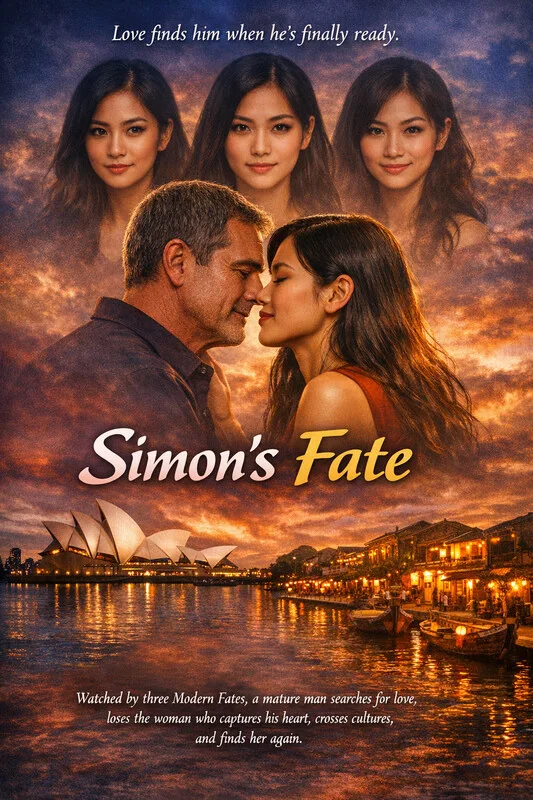
SIMON'S FATE
Synopsis
Simon, 57, lives a mundane life. Denial provides emotional safety, but fogs yearning. He’s barely aware of the shadows of childhood trauma: a failed marriage, financial disaster that dog him. Things look up when he finally gets a job, a better place to live and finds wry flatmate, Sarah.
Then humiliation at his daughter’s wedding triggers his search for love. He joins dating sites. His good friends Nick and Catherine encourage him. But lacks charm. His first date is a blind date with Athena, a lively Greek woman with a tragic past. Three Modern Fates appear in her mind. They sit in an ethereal room and their observations of Simon’s journey and on gender issues flow with the story. On early dates he’s rusty and amusingly awkward. He connects deeply with Chau. But she’s trapped with a crime family. He notifies the police and watches them rescue her. Then then they fence her with security, return her from Australia to Vietnam and cut her out of his life. Chinese woman Lisa lures him with words of love and a taste of crypto wealth. He sells his car to invest. She’s a romantic scammer who plunges him into a winter of misery. He closes his dating apps. Catherine urges Simon back to therapy just as she severs ties with a surprised husband Nick. She connects Simon with Laura, her friend, and a gorgeous looking, talented therapist.
Months later Catherine praises Simon’s progress and encourages him; “try again.” With Chau in his heart, he joins dating site Vietnam Cupid. Chau’s not on the site but he connects with Thuy and finally plans time with her in Ho Chi Minh. A business opportunity also arises. Thuy ghosts him just before his flight.
On arrival Mai, a friend of his business interpreter Wendy, greets him. Mai’s a free spirit and they connect intimately. But just hours later she dashes his hopes. She gives him a bittersweet consolation, a tour of amazing Vietnamese places courtesy of her travel company. It happens to be with a coach full of monks and elderly Asians! After the tour, he scours Ho Chi Minh City for Chau, his hopes fading in the oppressive heat. Circumstances snuff a fleeting spark with Wendy. In the dying days of his trip, he dines where seemingly by chance, Chau works. Romance soars along with mesmerising Bamboo Theatre a sensuous tango and a spiritual high. But tension flares as Mai returns early and wants Simon. She’s pregnant!
A year later, back in Australia, Chau is Simon’s partner, and Mai is their close friend. At the very end we see Simon absorbed, happily holding his baby.
This picaresque tale flows with engaging characters, magical realism, and thoughtful social comment. Along the way we discover that the three Vietnamese women, Chau, Mai and Wendy, are subtle echoes of the Fates. Audiences will laugh at Simon, grow to love him, and leave uplifted.
Reader Comment
“Simon’s story resonated with me deeply. I have a strong interest in personal growth and love, so I felt emotionally connected. The dating scenes were humorous and heartfelt, and the tour with monks and elderly travellers was especially intriguing—it felt like a turning point in his growth.”
— Liana Kim, 34, Korean Australian creative writing graduate.Selections and Awards
- 3 Awards, 3 Official Selections, 2 Finalist Positions from 10 festival competitions
- Ranked highly in the 2025 HOT 100 list by Capital Fund Screenplay Competition
- Petros Silvestros, Head of Scripts at UK Film Festival – London:
“….the emotional trajectory of the main character is compelling, the atmosphere is extraordinarily authentic, and the characters are beaming with life. Darryl Bubner writes from his heart and through an immense life experience that enables him to observe universal themes and delve into a complex man’s psyche.”

Submissions
everyone has a story to tell…
We invite you to submit your projects, feature scripts or any of your recent screenplays to be considered for our festival.
Our expert panel of industry professionals will review all submissions and select a diverse group of Winners and Official Selected.