What inspired you to become a screenwriter, and what keeps you motivated to keep writing?
Red Smoke was an Indigenous Shawnee with little “formal education.” This mattered not. His classroom wasn’t confined to brick-and-mortar structures. It was every mineral, living entity and stream of consciousness of this world and beyond. And with the equivalency of a half dozen doctorates, philosophy, history, nature and storytelling, were ingrained in his Soul deeper than the inner rings of a 400-foot Sequoia.
His dance floor was the ground his ancestors called home for five millennia. The Indigenous music and dance he moved to before he spoke was in his ear the moment he came into this world. A drum circle was his church.
I called Red Smoke uncle. Some called him the Shawnee word for “Medicine Person” (Shaman.) Everyone called him a friend. For many he was the center of wisdom. His folk tales and oral histories represent a lineage tracing back to the elders that told these same stories before men in boats “discovered” this landmass now called America. *“hocheepkiiwilini” is the Shawnee word for Medicine Man/Shaman. Pronounced: ho-chaayp-keee-we-lay-nee
Sister Mary Catherine was a Catholic Nun that had the unenviable task of “tending to my behavior.” But the Sister became an unexpected mentor. She always had time to listen, ponder and challenge points of view without condemnation. Her storytelling was fueled by massive stacks of books and an angelic calling that unquestionably came from a higher power.
Understandably, individuals with secular ideologies might view the celestially affirmed personas of Red Smoke and Mary Catherine somewhere between antiquated notions and absurd superstitions. However, metaphysical doctrines notwithstanding, these were unquestionably two genuine forces of nature. And if their respective deeds on this earth took part independent of any divine intervention they would then stand as examples of Darwinian super stars; the very best of evolutionary accomplishment.
Red Smoke demonstrated the ability to *fast (abstain from food/water/sleep) for up to four days, in complete isolation, often in incredibly harsh conditions (extreme heat, freezing cold) to achieve what modern western occult culture refers to as “ecsomatic soul travel.” His Lakota brothers and sisters referred to this as, (akiha iciyapi, pronounced: ah-kee ahaln ee-chee-yah-pee.) The physical stamina, threshold for pain and metal discipline required for the entire process is beyond comprehension and often misunderstood; even by many academics. *There is no direct translation in English for, “akiha iciyapi.”
In this out-of-body experience (OBE), a form of intended travel takes place in which the person’s “self” separates from his/her body. Once again, to best describe in western terms, this is a form of astral projection: essentially soul travel. Indigenous Cultures of North America, The Lakota for example, have been practicing these Vision Quests and forms of Spirit Walking for millennia.
But, as with Sigmund Freud’s theft of dream interpretation (Something Indigenous cultures have been practicing for thousands of years) western cultures have co-opted this extremely spiritual aspect of Native American/Indigenous cultures and claimed it as theirs. And, as usual, figured out how to commercialize it; thus, debasing something non-material, transcendental and most importantly sacred.
Men and women of a cynical nature would claim that sleep/food/water deprivation creates not authentic spirit walking, but a state of biological delirium. However, if you witness, first hand, someone in a genuine state of ecsomatic soul travel there is no conjecture. And, there are, for reasons I’ll never understand, persons that are ardent non-believers that will experience authentic “Visions.” But as Red Smoke often said. Anyone that receives a vision, receives it for a reason; even if it’s not clear to them.
The fact remains there are persons capable of feats of mental discipline that defy the boundaries of reason. When Sister Mary Catherine could remain kneeling before her Holy Symbols for twelve consecutive hours on her day off and then complete 24 hours of consecutive responsibilities in perfect form it was apparent her beliefs were solidified to the point of scripture.
When informing the Sister I had a desire to write, she conceded it was not within her scope to determine my level of God given ability. However, if anyone were blessed with a natural aptitude, in a given field, there must be a thousand days in which ten hours a day must be spent to show your Maker gratitude.
Remarkably, the good Sister’s challenge to me regarding 10,000 hours of writing was presented before a famous 2008 book that made famous the concept of 10.000 hours of practice (in a giving field of skill.) Also stressed was the task of quality work based on trial and error. As opposed to “mindless repetition” as she called any effort devoid of passion.
Before she passed, I asked Mary Catherine if she “got ripped off,” and she said this rule of extreme practice was an old violin lesson parable. She played the violin and played it well. Because, after all, she was Sister Mary Catherine and there weren’t many things she couldn’t do.
Red Smoke and Mary Catherine are still here. Just not of this world. And I write in honor of them. I have to. I have to do something, and hopefully do it well. I’d like to tell Red Smoke I had my own experience with “the other side.” And I would like to tell The Good Sister than I went well beyond the 10,000 hours of highly focused writing.
Some would say they didn’t live to see it. However, I’m certain they know.
Can you tell us about your writing process, from the initial idea to the final draft?
As the decedent of a storytelling culture a campfire will often take the place of an electric bulb. Only some writing is done sitting at a desk. Pitching a tent, or making a sleeping structure with branches and felled tree limbs was second nature since my first recollections. This was not a novelty; but a matter of function. Later as a young adult I was never what you’d call “homeless.” I simply lived in nature, and was able to harness the abundant resources around me. And when deer, or even squirrel meat could not be had, there was the wisdom of Tennessee Williams and one of his characters.
The Blanche DeBois-esque style of survival was utilized more than I care to recall. Hunger has a way of opening one’s mind to the concept of “depending on the kindness of strangers.” Hunting knife and writing paper were always on my person. As were a great number of Hershey Bars which replaced the demon alcohol for me. The single most important tidbit of insight I care to impart is no firewater! For many, it is death in a bottle. Worse, the evaporation of one’s Soul is a crime against the Creator. So go with chocolate. But even that has a downside despite being one of the greatest inventions in human history.
Times change, but people don’t. People have the capacity for betterment. And even holdouts like me can open up to new ways of thinking. The advantages of having a computer, and machines to print out words are an incredible ally. Coming to terms with modern tech while not physically assaulting my laptop has increased my productivity to a level, I never believed possible. And the appreciation for all the new machines lends comfort to the mind. Back up files and cyberspace are pretty much “wilderness proof.”
On two different occasions bear completely consumed my hand written texts. The first was a term paper. The second was a year later when my wilderness nest was devoured by bear number two and her cubs, thus obliterating a manuscript which represented a full month of meticulous note taking. If you think telling you teacher the dog eating you homework was futile, try telling a Catholic Nun a bear family consumed your term paper chronicling the tactical horsemanship of 19th century Comanche warriors.
Life and death advice regarding deep wilderness writing would include abstinence from any form of sweet treats. As a lifelong practitioner of woodland lounging I realize food must always be placed a great distance from where you sleep. And never have food items anywhere near your sleeping structure.
However, even if you consume your candy bars a great distance from your sleeping bag, chocolates’ prolific scent will stay on your fingers, and in turn, dissolve into your writing paper like purple pokeweed berries into a white cotton shirt. Therefore, going to sleep with your paper journal in your arms is a signal to bears that a candy bar factory just opened and tearing through your torso is the way to get there. And since bears have scent receptors even more advanced than dogs, your journal’s going to be a meal. Perhaps along with your lower intestines.
Waking from a slumber to the bristly tongue of a 300-pound female black bear licking your stomach is something everyone should experience. And if that doesn’t make you give up writing, or chocolate, you know you’re on the right journey.
How do you approach creating characters, and what techniques do you use to develop them?
Often characters introduce themselves to me in a dream state. People need not be alive on this Earth to deliver a message. Nor do all signals have to come from the human species. We have much company amongst The Great Spirit’s messengers. Some take on flight and others walk on four legs.
A raven would always appear when I was in the company of Uncle Red Smoke. Thus, I was given my name. This bird still speaks to me, often with a message from Red Smoke. These signals guide my story characters at times.
When a person no longer has life in the body, their spirit begins its journey. Sometimes this Spirit is desperate to leave one last message for the living. In the deep woods I came across a man that froze to death with knife wounds. His body would soon become as hard as the ground and his legs had already been consumed by the local creatures that were hungry. Not much, but his face had clear bites that showed the lower left half was partially consumed.
He had a medallion for The Christ that was secured in his frozen left hand. An expensive pen was in his right, but few legible words of print were on the large sheet of yellow writing paper next to him.
Sister Mary Catherine’s favorite Saint was a Benedictine nun from a thousand years ago. This was Saint Hildegard of Bingen who happened to be a patron of writers and those attempting to deliver a message. That evening I asked Hildegard to allow this man’s last message to enter my unconscious sphere.
The dead man lived an evil life, and cheated many. He did however perform one last noble deed and wanted it known there was some good in his Soul. That message allowed me to develop a character that would make for a better play. It delivered some humanity to an otherwise unsavory character.
Two years later I learned the deceased man left a large amount of funds to an organization that helped murdered and missing Indigenous women and children. It was the dead man’s sister that came to thank me for having his lifeless body protected from the elements before his face was further consumed.
Can you share with us a bit about your latest project and the story behind it?
Several producers, including a documentarian from South Dakota have come to us regarding a project that would focus on The Karl May Festival in Bad Segeberg, Germany. As many know, this is a festival produced by Germans in which they portray Indigenous Persons of North America. And this festival is not without some controversy.
Some in the Native American community are offended by this event because Indigenous Persons are played by Anglo Persons. Therefore, some consider this cultural appropriation in the highest form. Also, some elements of the Karl May Festival are not historically accurate.
But I for one, and others in the Indigenous community do not condemn the people of the Karl May Festival for this. In fact, when it comes to historical inaccuracies, it’s understandable since there is often much contention within the Native American community itself regarding the specifics of our history.
Moreover, when you acknowledge the fact that the total number of Native American populations consist of almost 600 distinguishable ethnolinguistic Aboriginal American Assemblages, it’s impossible for every tribe (Nation) to have the same point of view. Therefore, how can anyone expect a European population to have a fully accurate knowledge of North American Indigenous Persons when there is so much contention within the Native community itself?
Moreover, the Karl May Festival is an event that shows Indigenous Persons from North America in an overwhelmingly positive and heroic manner. In fact, the Karl May Festival production is considerably more kind to Native Americans than portrayals that came out of Hollywood’s golden age of cinema (1920’s to early 1960’s).
The fact that the German culture is literally an ocean away and still takes such a passionate interest in Native Americans is indeed a complement. And the sincere and deliberate effort to be open minded when portraying Native Americans is a generosity of decency.
My personal experience with the people of Germany as a youth was also overwhelmingly amazing. Since I am an American of a mixed background, I experienced life on reservations as a child and spent summers in Germany; the birthplace of my late mother.
When living on my maternal grandmother’s cottage, the German boys in the village were fascinated by my stories of reservations. And instead of ridiculing me, as was done often in American, they took me in and made me part of their activities social and athletic. This resulted in genuine friendships on the football pitch and late-night shenanigans. These German boys could fight like boys where I came from. But these always resumed in friendship over the local drinking customs. It always turned into “Gemütlichkeit.” As with so many words in Native American languages, there is no English translation for this wonderful word.
As of today, several elders from Tribal Nations have extended an invitation to the producers, and talent of the Karl May Festival. We welcome your company not as critics, but enthusiasts. There will be no demands, but instead an opportunity of sharing cultures.
Storytelling, drum circle musical performances, sweating purification rituals in teepees, native dance and even bareback horsemanship are aspects we would love to share with the artists and enthusiasts of Karl May.
Perry Dancing Eagle Little of the Sacred Horse Society from South Dakota has even extended an invitation to his reservation to witness, first hand, how young warriors of today take part in a weeklong adventure riding bareback while speaking to one another in our native tongues. Dancing Eagle is Lakota on his dad’s side and Dakota on his mom’s. His knowledge of “Sioux” history is enormous as are his skills in horsemanship; although he is too humble to admit this.
For those Germans that are equine aficionados, Perry Dancing Eagle Little will joyously explain the roots of a very special breed known as the American Indian Horse. These sacred animals are an officially registered breed that goes back to the Spanish Colonial Stock.
The American Indian Horse comes in every color scheme imaginable as the Appaloosa patters are numerous. References in literature often call them “Mustangs.” What’s fascinating is certain bloodlines trace back to specific Indigenous Tribes. Therefore, there are breeds within breeds; all of which took part in battles that displayed incredible feats of warrior horsemanship.
Claude Two Elks is an Elder in the “Sioux Nation” Indigenous culture that would be willing to share oral histories of his great-grandfathers that rode with Sitting Bull and fought at the battle of Little Big Horn. He can share with you how a U.S. Cavalry Officer by the name of Lieut. Col. George A. Custer was attempting to attack Naïve Women and Children resting by a small pond.
This was a strategy implored by the United States military in the 1800’s. By attacking women and children the U.S. military believed the Native American warriors would be put in a disadvantageous position by having to fight a defensive battle. Or so the U.S. soldiers believed.
However, that day did not end well for George Custer and his 210 troops.
Claude Two Elks’ great-grandfather as led by Sitting Bull would assist in ushering Mr. Custer and his men to their next lives on June 25, 1876.
Other persons willing to contribute to overall knowledge of our history and culture are Wendy Wells whose Indigenous name is pronounced, tahsung nahgee okeeya wee, meaning (Helping Horse Spirit Woman). She, like her husband Perry Dancing Eagle Little, is too humble to detail this herself. But her actions to assist the Native American Community are too numerous to mention in a few brief pages.
Also available to The Karl May Festival staff is Patty Bordeaux-Nelson of the Oceti Sakowin Writers Society. Patty can trace her Indigenous ancestry many centuries and would love to share her resources as they pertain to the top Native American writers of the 21st century. Often overlooked in contemporary media is the number of Indigenous academics, professors and scholars.
All mentioned are ambassadors of peace. And all wake up every day wishing to enlighten interested parties regarding an incredible history of Indigenous music, art and storytelling. While also chronicling the torture, rape and theft that took place, and still does.
This is not a trip for the faint of heart. You will be in the middle of The United States of America, but on reservation land where you are subject to a different set of folkways and mores. Because on tribal land, you are both in the present and past. You will see with your eyes things that will change you. You will never walk your lands the same after you’ve walked this one. Part of us will forever live within your hearts.
You will dance with us and be one with The Great Spirit. That much is sure. At only 8-years-old, Wambli “Baby Wam” Dolezal is already a national treasure that stole the show at the 2025 Macy’s Thanksgiving Day Parade in New York City. Baby Wam, as his family calls him, has the ability to bring people to an absolute state of euphoria by way of dance. His art form is Woodland Traditional Powwow Dance and all you need to do is watch him for five seconds on YouTube to see why this little giant is a super star capable of bringing joy to millions. Little Wam along with the half dozen additional Native American dancers were one of the most watched events on American TV last Thanksgiving. There is no doubt Little Wam and his fellow Native Dancers would bring an extra ten thousand spectators a day to an event such as Karl May Festival.
But first, you will come meet us here in The Dakota Territory, as we still call this land. You will be honored guests. In a culture that goes back many centuries, in land far away, you will experience Gemütlichkeit.
What do you think sets your writing apart from others in the industry, and how do you showcase your unique voice?
The stage plays and screenplay’s composed by Erich Listening Raven Ruehs are a collaborative creation by some persons no longer here on Earth but in the dominion of The Great Spirit.
Everything I have made monetarily in terms of profits on my works has gone back to my people. I do this not because I am anti-capitalist, or posturing myself as a “socially conscious crusader.” I’ve been hot air ballooning, and flown on a private jet. And liked it.
However, appeasing the spirits of lost elders, regardless of their backgrounds or religious orientations is so overwhelming, the desire for self-gain is drained away. It is their stories that represent the constant input that fuels these projects. That’s where I get my high from writing. So, in that sense I’m being paid a King’s ransom. There can be no monetary sum that can bring me more joy.
How do you balance your personal creative vision with the needs of producers, directors, and other collaborators?
On some level, I don’t.
My humble screenplay, REZ, was viable enough to the money counters to the point of a large monetary offer. The only “proviso” (as they called it) was that all references to Native American history and the Indigenous dialogue would be replaced with mainstream references.
When I walked out, a little man in an expensive suite got up and put his hand on my left shoulder, asking me to “listen to the numbers again.” I responded by stating that if he touched me again, his actions would be considered an act of aggression and I would respond in kind.
This very small person, not in physical size, but decency said to me, not with words, but with his eyes, I did not belong as he chuckled. But he also knew I walked away with full conviction and never had the desire to honor him with my consent, let alone company.
However, when the Indigenous element of REZ is honored, I am of the gentlest nature. When REZ was in the form of a stage play, the director and producers of Anglo backgrounds were my artistic brothers and sisters.
I was even described as having the most “open minded and collaborative spirit conceivable.” That came from a director of my Off-Broadway play in 2016 when the production was called, “LAST OF THE CAUCASIANS.”
Can you talk about a particularly challenging moment you faced while working on a project and how you overcame it?
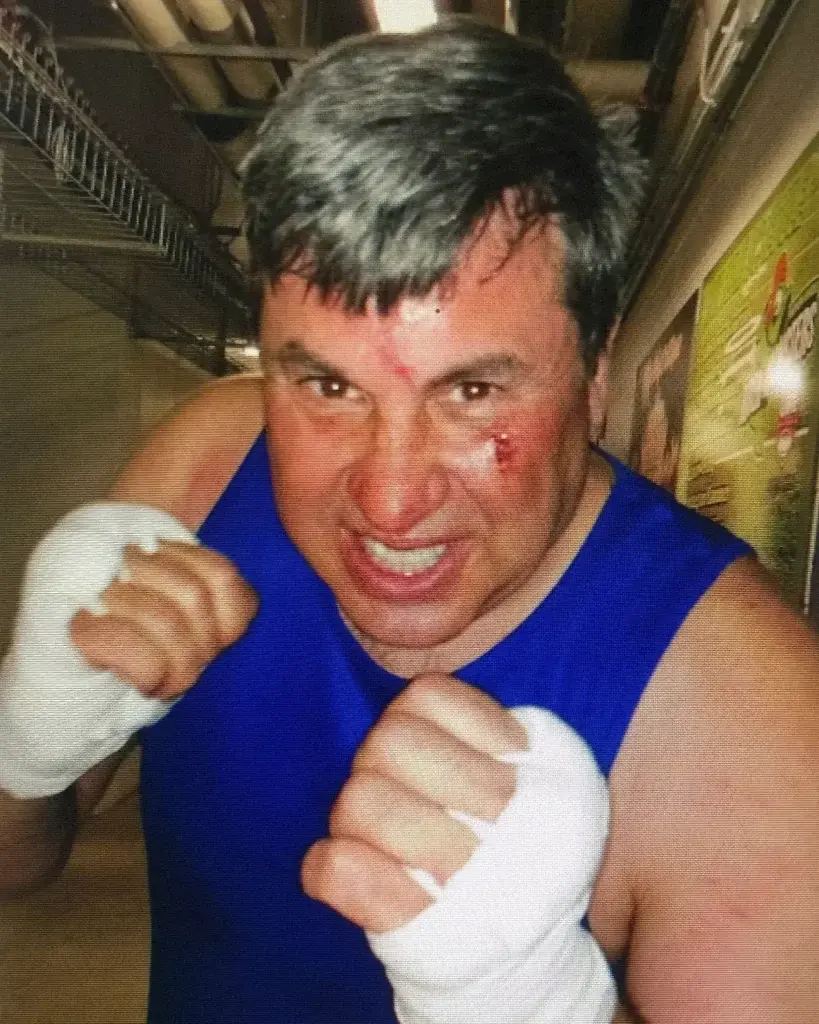
When working with a young Indigenous actor we ran into a “failure to communicate,” as a famous movie line went. Instead of taking stage direction, the young man threatened to take a swing at his director which in this case, was me. The stage is a sacred space dedicated to artistic, not pugilistic expression so the director invited the younger man to an adjacent alley. Here, a mutual expression of fist-a-cuffs could take place.
This was a lifetime ago when my workshops were as raw as my demeanor and my temper was as short as my achievements. I expected a professional attitude from my actor, but put forth none myself. I also failed to take into account the last time this actor took directions it was from an officer of the law telling him where to stand in a police lineup.
To the dismay of all there, director and actor exchanged blows. Both men made contact. Both new more than just physical prowess was on the line. After the initial exchanges multiple harder contacts took shape. Cuts were now on both faces. Sweat mixed with cut wounds and hyperventilation.
The director asked the younger man again if he would take direction which resulted in him delivering an improvisational monologue that would have made Marlin Brando weep.
As stated, this was a lifetime ago. But since both director and young actor grew up in a world where physical violence was a form of survival and not choice, there had to be something of a theological realization. Acting out a scene from a stage play meant nothing if we could not come together as former warriors. Or as the system referred to us as, delinquents.
When the young man said he did not wish to forget his past, regardless of how violent, I told him didn’t have to. However, the world that always seemed to pit us against each other like two roosters in a cock fight would no longer find entertainment in our internal strife. The cruelest irony is how the most downtrodden of society can easily fall victim to our own self-hate. This can only manifest itself by fighting those who most remind us of ourselves.
This could only end two ways. The first is easy. The second is difficult, but not impossible. We must become one force. The sword will be positioned behind the pen as we become a single tribe. Let no man put his hands on us. Let no organization with all their funds and influence tell us we don’t belong. Let us become warrior poets.
That day was hard for both of us. But we now realize we can walk away from the bad medicine of small men with expensive suits and big balance sheets. Their lives are short and only exist in this world.
How do you see the role of screenwriting in the film industry evolving, and how do you see yourself fitting into that future?
Actual diversity will take place. The realization that Indigenous artists are about to hit the mainstream like a thunderbolt will happen.
As far as my role, that’s irrelevant. There’s something so much larger than any single writer. Ten millennia. That’s 10,000 years. There’s that number again. That’s how long men and women have inhabited this landmass that only recently is referred to North America.
Incredibly there is still a connection to that very ancient history. Elements of those men and women still live in the spirit of song, dance and storytelling. It’s powerful. It’s still alive, even if it’s a low burning ember.
But every inferno begins with a spark.
Can you share any advice or tips for emerging screenwriters who are just starting out?
Get out of your comfort zone. Meet people and go places you hardly even know exist. Even in the most populated urban environments people can become content within the confines of their one or two city blocks. The options are endless.
One place is a reservation. You will meet persons that have a completely different mindset of the land, animals and other people. A connection to the land they stand on that goes back, in some cases, thousands of years. That’s the good news. And there’s a downside.
You will encounter much sadness. The rate of addiction, single parent households, poverty and hopelessness is staggering. Violence, abuse and ill-health come in various forms; physical and spiritual and too often both.
Regardless of your personal social, political or religious point of view you will gain a sense of universal understanding. In turn, the characters that you pump dialogue into will become more complex. You’ll realize these make-believe characters you are creating on paper, or your laptop are actually coming to life. And maybe they are. Maybe it results in the most unlikely of all things; a vision.
Finally, what are your long-term goals as a screenwriter, and what legacy do you hope to leave in the industry?
To leave a footprint that’s not attached to my name, but a righteous effort.
My humble participation is the reward, and if my name is not remembered, it’s of little consequence. I’ve sat with and was in the company of great people. And for a very brief moment in this life, I’ve been blessed with the chance to pass along part of what they held to be true. That’s when you’ve achieved the only success that matters.
The industry is wonderful and full of potential. But I would rather be riding my Appaloosa horse in Dakota Territory with my friend Dancing Eagle and his son Tasunka Wakon; which translated his name means (His Sacred Horse.) Perry Dancing Eagle Little and his son (His Sacred Horse) are often on their four-legged spiritual beasts that pump the blood line of their equine ancestors.
Our horses fought with us in battle then as they still do to this day. That battlefield has taken on a different landscape but is no less important. Man and horse die. But if we ride well, we both live on through our offspring. In that sense after we perish from this existence, we are still with those who take up the Eagle Staff (Tscdettan).
There is a phrase attributed to a Lakota Sioux warrior when he is about to face battle and possible death:
“Nake nula waun welo”
That statement has been interpreted to simply mean, “Today, is a good day to die.” It’s something you can honestly say when you come to the realization that defending your family, home and way of life is worth your time on Earth. And when you get to pass along the stories of those who came before you, you will find happiness in what comes after this.
Submissions
everyone has a story to tell…
We invite you to submit your projects, feature scripts or any of your recent screenplays to be considered for our festival.
Our expert panel of industry professionals will review all submissions and select a diverse group of Winners and Finalists.